

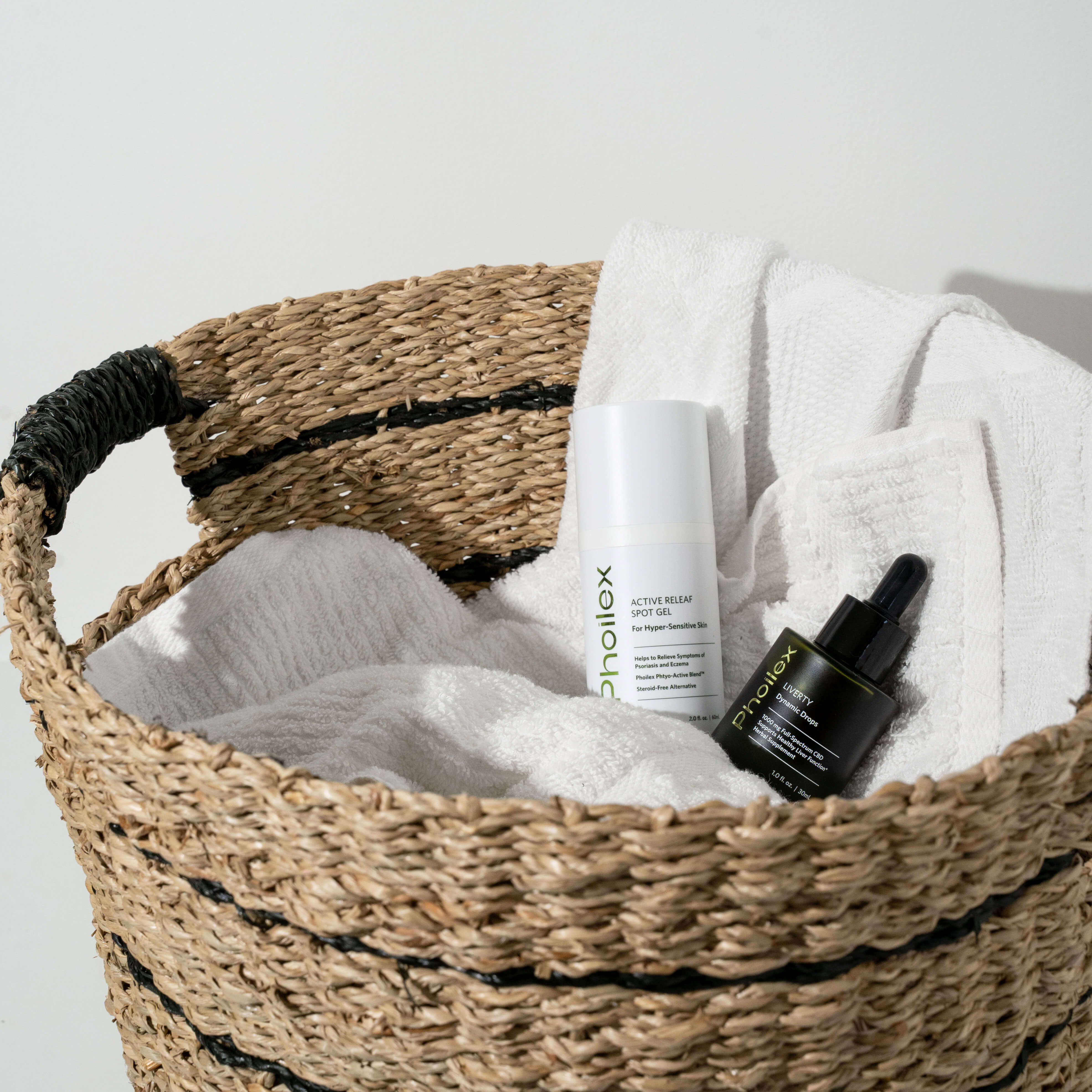
The Science of Botanical Skincare in Psoriasis Care
Psoriasis is a chronic, immune-mediated inflammatory skin condition affecting millions of people worldwide. Managing its unpredictable flares, scaling, and stubborn plaques is often a lifelong journey. In 2026, the clinical landscape for psoriasis has shifted toward a highly holistic model. Dermatologists and patients alike recognize that managing psoriasis is not just about clearing plaques through heavy pharmaceutical intervention, but also about nurturing the skin barrier.
This has led to a remarkable convergence where Complementary and Integrative Medicine (CIM) now works side-by-side with modern systemic therapies. Botanical skincare, focused on barrier-repairing emollients and scientifically supported plant extracts, has moved from the fringes of alternative care into mainstream clinical guidelines. This comprehensive guide explores how major dermatological authorities view emollients, botanicals, and complementary therapies for mild to severe psoriasis.
The Shift Toward Integrative Care
Modern medicine has made monumental strides in systemic psoriasis treatment, particularly with targeted biologics and next-generation oral treatments. However, topical care remains the cornerstone of daily disease management. Clinical data shows that over 85 percent of individuals with psoriasis rely on topical regimens to maintain comfort and skin clearance.
Consequently, research in botanical skincare has accelerated. Both patients and physicians recognize that a dual approach, addressing systemic inflammation internally while soothing and repairing the compromised skin barrier topically, yields the best outcomes and enhances overall quality of life.
Joint AAD-NPF Guidelines: The Official View on Integrative Medicine
The Joint AAD-NPF Guidelines serve as the primary clinical framework for managing psoriasis in the United States. While these guidelines establish the gold standards for traditional topical treatments, such as topical corticosteroids, vitamin D analogues, and tazarotene, they also dedicate extensive analysis to alternative medicine (AM) modalities.
According to these guidelines, complementary therapies are viewed as supportive tools rather than replacements for conventional medical care. The guidelines evaluate several natural options, highlighting that while some botanicals show clear therapeutic potential, others require cautious use. The clinical expert working group emphasizes that dermatologists must actively guide patients on the safe integration of these remedies. This involves monitoring for potential side effects, such as local skin irritation, and ensuring that natural products do not trigger negative drug interactions with prescribed systemic or biologic treatments.
NICE Guidelines: UK Standards for Emollients and Complementary Care
In the United Kingdom, the National Institute for Health and Care Excellence provides structured guidance through the NICE CG153 Guideline. The NICE pathway outlines a highly disciplined approach to managing chronic plaque psoriasis, starting with active topical therapies and moving to systemic treatments if the disease is severe or unresponsive.
NICE guidelines place a massive emphasis on the liberal, frequent use of emollients. Regarding complementary and herbal therapies, NICE maintains a conservative but open stance. While the committee notes that current clinical trial data is not yet robust enough to recommend specific herbal remedies on the National Health Service (NHS), they emphasize the importance of patient preference. The guidelines advocate for shared decision-making, where healthcare providers discuss complementary therapies openly with patients, ensuring they are used safely alongside conventional protocols.
The Physiological Importance of Emollients and the Steroid-Sparing Effect
In psoriasis management, emollients are far more than basic cosmetic moisturizers. Psoriasis severely disrupts the lipid barrier of the stratum corneum, the outermost layer of the skin. This disruption leads to rapid transepidermal water loss, painful cracking, and intense itching.
Emollients work by filling the gaps between peeling skin flakes with lipids and proteins, smoothing the skin surface, and locking in vital moisture. NICE guidelines recommend that patients apply emollients regularly and liberally, often 250 to 500 grams per week, to all affected areas.
Crucially, emollients serve as valuable steroid-sparing agents. By keeping the skin deeply hydrated and reducing scaling, they help control mild flares and can decrease the frequency and potency of topical corticosteroids required to manage the disease. For optimal results, dermatologists recommend a structured application method: apply the emollient first, wait approximately 30 minutes to allow the barrier to absorb the hydration, and then apply the active pharmaceutical topical directly to the plaque.
Navigating the Evidence: Key Botanical Modalities
To help navigate the evidence surrounding these natural and barrier-repairing interventions, the table below outlines the primary modalities, their active mechanisms, and how they are positioned in major clinical guidelines.
| Modality / Botanical | Evidence Level & Source | Primary Skin Benefits | Guideline Position (AAD / NPF / NICE) |
|---|---|---|---|
| Standard Emollients & Moisturizers | High (Extensive clinical consensus) | Restores lipid barrier, reduces desquamation (scaling), and relieves pruritus. | Strongly recommended as first-line adjunctive therapy by AAD, NPF, and NICE. |
| Mahonia aquifolium (Oregon Grape) | Moderate to High (Multiple RCTs) | Contains berberine; inhibits keratinocyte proliferation and reduces inflammation. | Acknowledged by NPF and AAD as an effective topical botanical for mild-to-moderate plaques. |
| Indigo naturalis (Qing Dai) | Moderate to High (Robust clinical evidence) | Regulates epidermal cell differentiation and downregulates pro-inflammatory cytokines. | Identified by the NPF and systematic reviews as having strong topical efficacy. |
| Aloe vera (Aloe barbadensis) | Low to Moderate (Inconsistent clinical trials) | Soothes skin, reduces mild erythema and scaling due to wound-healing properties. | Considered a safe complementary topical option for symptom relief; not a replacement for active therapy. |
| Turmeric / Curcumin (Topical & Oral) | Moderate (Supported by pilot studies) | Inhibits phosphorylase kinase; acts as a powerful systemic and topical antioxidant. | Recognized as a supportive dietary and topical intervention by the NPF. |
Deep Dive into Botanical Ingredients: Evidence and Application
For patients seeking natural relief, the National Psoriasis Foundation provides comprehensive resources on Complementary and Integrative Medicine (CIM). NPF surveys indicate that more than 40 percent of individuals with psoriatic disease utilize alternative therapies, primarily because traditional medications can sometimes cause side effects or fail to fully address localized discomfort.
Several botanicals stand out in clinical literature for their therapeutic properties:
- Mahonia aquifolium (Oregon Grape): This evergreen shrub contains potent alkaloids, particularly berberine. A systematic review of CAM therapies highlights Mahonia aquifolium as one of the most clinically proven topical botanicals, shown in randomized controlled trials to slow down the hyperproliferation of skin cells (keratinocytes) and reduce inflammation.
- Indigo naturalis (Qing Dai): Historically used in traditional Chinese medicine, this botanical has demonstrated remarkable efficacy in modern clinical trials. Its active constituents, indigo and indirubin, modulate epidermal cell differentiation and suppress inflammatory cytokine pathways, making it highly effective at thinning and clearing stubborn plaques.
- Aloe vera: Recognized for its exceptional wound-healing and soothing properties, Aloe barbadensis leaf extract is frequently used in emollient creams to cool irritated skin, reduce redness, and alleviate the burning sensation associated with active flares.
Integrative Care in Severe Psoriasis
It is critical to distinguish between mild-to-moderate and severe psoriasis. Severe psoriasis, defined as affecting more than 10 percent of the body surface area, or involving high-impact zones like the face, hands, scalp, or genitals, cannot be managed with botanical skincare or emollients alone.
In 2026, severe psoriasis is primarily treated with highly sophisticated systemic therapies. These include biologic drugs that target specific interleukins (IL-23 and IL-17) and novel oral small molecules.
However, botanicals and emollients remain highly relevant as complementary therapies. Systemic medications work to clear the skin from the inside out, but they do not immediately repair the physical skin barrier. Using high-quality, botanical-infused emollients alongside systemic therapies helps soothe persistent localized plaques, prevents skin dryness, and provides immediate relief from itching, which dramatically improves a patient’s daily quality of life.
Safety, Quality, and Patient Education
While botanical skincare offers tremendous benefits, natural does not automatically mean safe. Many botanical ingredients contain complex organic compounds that can act as contact allergens or sensitizers.
Before incorporating any new herbal or botanical product into your skincare routine, it is essential to perform a patch test on a small, unaffected area of skin for 24 to 48 hours. Furthermore, always discuss these products with your dermatologist. Some herbs, such as St. John's Wort, can cause photosensitivity, which can be dangerous if you are undergoing medical phototherapy.
Conclusion
The modern approach to psoriasis care in 2026 is truly integrative. By combining the rapid, deep-acting power of advanced medical treatments with the nurturing, barrier-repairing benefits of scientifically backed botanicals and emollients, patients can achieve comprehensive relief. Work closely with your healthcare provider to construct a balanced, safe, and effective routine that treats your psoriasis from both the inside and the outside.
Frequently Asked Questions (FAQs)
What is the difference between complementary and alternative medicine for psoriasis?
Complementary medicine refers to non-mainstream treatments used alongside conventional medical therapies, such as using a botanical emollient while taking a prescribed systemic biologic. Alternative medicine refers to using non-mainstream treatments in place of conventional medicine. Major medical organizations, including the AAD and NPF, strongly recommend a complementary or integrative approach rather than relying solely on alternative medicine, especially for severe cases.
Which botanicals have the strongest clinical evidence for treating psoriasis plaques?
According to clinical reviews and dermatological guidelines, Mahonia aquifolium (Oregon Grape) and Indigo naturalis (Qing Dai) have the most robust clinical evidence for topical application. Mahonia aquifolium contains alkaloids that help slow skin cell overproduction, while Indigo naturalis has been shown to significantly reduce plaque thickness and redness by modulating inflammatory pathways.
How should I use emollients alongside my prescribed topical corticosteroids?
Both the AAD and NICE guidelines recommend using emollients liberally and frequently to keep the skin hydrated and soft. When using them with a prescription topical corticosteroid, it is best to apply your emollient first, wait about 30 minutes for it to be fully absorbed, and then apply the topical steroid directly to the active plaques. This prevents the emollient from diluting the active medication and helps the steroid penetrate the softened skin more effectively.
Can botanical skincare cure severe psoriasis?
No, botanical skincare cannot cure severe psoriasis. Severe psoriasis is a systemic, immune-mediated disease that requires prescription systemic therapies, such as biologics or targeted oral medications, to control the underlying inflammation. However, botanical-infused emollients play a vital complementary role by relieving localized itching, softening stubborn plaques, and repairing the compromised skin barrier.
Read more
As we navigate through 2026, the beauty landscape has undergone a profound shift. The era of aggressive chemical peels and multi-step acid routines has largely been replaced by a more harmonious...
The gentle rustle of oat fields, the scientifically precise ratio of essential skin lipids, and the quiet relief of an irritation-free morning. For millions of individuals living with atopic dermat...