

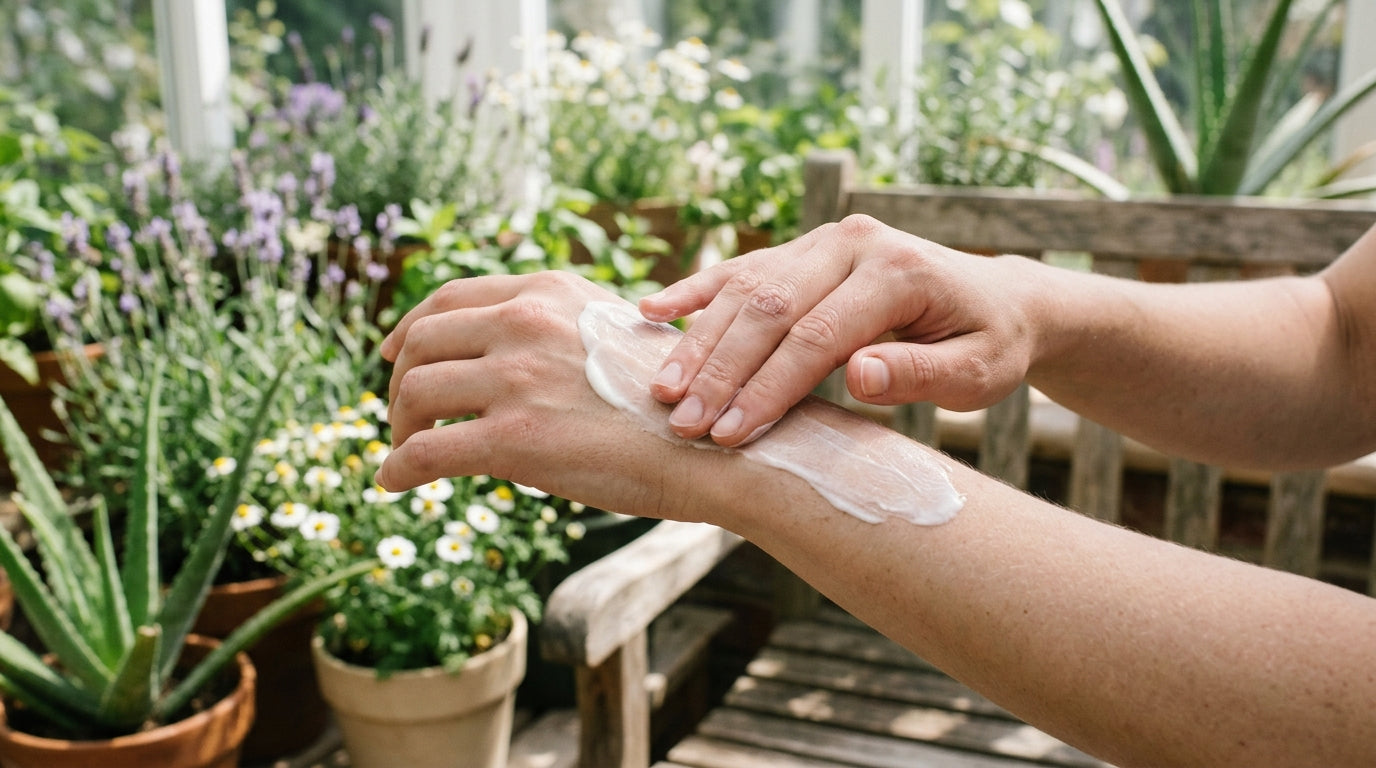
Steroid-Free Psoriasis & Eczema Skincare Guide
Chronic inflammatory skin conditions such as plaque psoriasis and facial eczema present daily challenges. For decades, topical corticosteroids served as the default primary intervention for flare-ups. While topical steroids offer rapid suppression of acute inflammation, prolonged or improper use carries well-documented risks, including epidermal thinning, telangiectasia, tachyphylaxis, and topical steroid withdrawal.
In dermatological science, botanical skincare formulations have evolved far beyond folk remedies. Rigorous randomized controlled trials now evaluate standardized botanical extracts, physiological lipids, and bio-identical barrier complexes. Whether you are managing stubborn psoriatic plaques on the body or delicate, reactive eczema flares on your face, understanding the clinical data empowers you to build an effective, steroid-free routine.
This guide explores the clinical trial evidence behind natural steroid-free psoriasis ointments, breaks down the biological synergy of colloidal oatmeal and ceramides for facial eczema, and provides a clear, step-by-step implementation protocol for daily management.
Understanding the Difference: Psoriasis vs. Facial Eczema
Psoriasis and eczema share common symptoms such as erythema, scaling, and intense pruritus, but their underlying immunopathology and structural defects differ substantially.
- Plaque Psoriasis (Psoriasis Vulgaris): Driven primarily by the interleukin-23/interleukin-17 (IL-23/IL-17) inflammatory axis. This immune pathway triggers hyperproliferation of keratinocytes, speeding up the normal 28-day cell turnover cycle to just 3 to 5 days. The result is thickened, raised plaques covered with silvery-white scales, commonly appearing on the elbows, knees, scalp, and torso.
- Atopic Dermatitis & Facial Eczema: Driven primarily by the type-2 immune pathway (IL-4 and IL-13) alongside structural skin barrier dysfunction. Genetic deficiencies in structural proteins like filaggrin, combined with severe depletion of intercellular lipids (specifically ceramides), compromise the stratum corneum. This allows moisture to escape rapidly via transepidermal water loss (TEWL) while environmental irritants and pathogens penetrate deeply, driving localized redness, burning, flaking, and itching.
Because the face features thinner skin and higher vascularity than the body, treating facial eczema requires non-comedogenic, barrier-restorative ingredients that do not compromise tissue integrity over time.
Clinical Trial Evidence: Natural Steroid-Free Psoriasis Ointments
When searching for natural alternatives to topical steroids for psoriasis, clinical efficacy must be backed by peer-reviewed human trials. Several standardized botanical extracts have demonstrated measurable improvements in the Psoriasis Area and Severity Index (PASI) and Physician Global Assessment (PGA) scores.
       +-------------------------------------------------------------+
       |       Clinically Validated Botanical Psoriasis Actives      |
       +------------------------------+------------------------------+
                                      |
         +----------------------------+----------------------------+
         |                                                         |
         v                                                         v
+-------------------------------+                         +-------------------------------+
|       Indigo Naturalis        |                         |       Mahonia Aquifolium      |
|  - Targets IL-17 pathway      |                         |  - Rich in berberine          |
|  - Active component: Indirubin|                         |  - Downregulates ICAM-1/CD3   |
|  - Normalizes keratinocytes   |                         |  - Inhibits cell proliferation|
+-------------------------------+                         +-------------------------------+
1. Indigo Naturalis (Qing Dai)
Derived from plants such as Baphicacanthus cusia and Indigofera tinctoria, indigo naturalis is one of the most rigorously researched botanical treatments for plaque psoriasis.
- The Science: The primary active alkaloid, indirubin, modulates keratinocyte proliferation and differentiation while suppressing pro-inflammatory cytokine expression.
- The Evidence: In a randomized, double-blind, placebo-controlled study published in BMC Complementary Medicine and Therapies, topical indigo naturalis ointment produced a 75 percent reduction in PASI scores (PASI 75) in 56.3 percent of treated patients over an 8-week period, compared to 0 percent in the vehicle control group. Biopsies revealed direct down-regulation of the IL-17 pathway, proving that standardized botanical ointments can modulate the same immune drivers targeted by modern biologics.
2. Mahonia Aquifolium (Oregon Grape Root)
Mahonia aquifolium contains high concentrations of isoquinoline alkaloids, particularly berberine, oxyacanthine, and berbamine.
- The Science: Berberine exerts strong antiproliferative effects on keratinocytes and inhibits lipid peroxidation. It also limits the activation of T-lymphocytes within psoriatic plaques.
- The Evidence: Systematic reviews in the Journal of Clinical and Aesthetic Dermatology highlight multiple randomized trials showing that a 10 percent Mahonia aquifolium topical ointment produces statistically significant improvements in plaque thickness, erythema, and scaling with an exceptionally low incidence of adverse effects. Immunohistochemical analyses confirmed that the extract reduces ICAM-1 and CD3 inflammatory cell markers in psoriatic tissue.
3. Curcumin (Curcuma Longa) and Pure Aloe Vera
- Topical Curcumin: Curcumin inhibits nuclear factor-kappa B (NF-kB) and phosphorylase kinase, two drivers of psoriatic inflammation. Clinical trials using micro-emulsified and lipid-carrier turmeric gels have demonstrated significant reductions in erythema and lesion thickness without the typical staining associated with raw turmeric.
- Standardized Aloe Barbadensis: When formulated as a stabilized 0.5 percent hydrophilic cream, pure aloe vera has shown the capacity to soften stubborn plaques, accelerate tissue healing, and soothe baseline irritation in comparative clinical trials against placebo.
Science of Facial Eczema: Colloidal Oatmeal and Ceramides
Facial eczema requires a gentle approach focused on lipid replenishment, soothing the itch response, and restoring the stratum corneum without clogging delicate facial pores. Combining colloidal oatmeal with bio-identical ceramides represents the gold standard for steroid-free barrier therapy.
       +-------------------------------------------------------------+
       |         The Dual-Action Barrier Restoration Matrix          |
       +------------------------------+------------------------------+
                                      |
         +----------------------------+----------------------------+
         |                                                         |
         v                                                         v
+-------------------------------+                         +-------------------------------+
|      Colloidal Oatmeal 1%     |                         |     Bio-Identical Ceramides   |
|  - Avenanthramides (anti-itch)|                         |  - Ceramides NP, AP, EOP      |
|  - Beta-glucans (hydration)   |                         |  - 3:1:1 physiological ratio  |
|  - Prebiotic oligosaccharides |                         |  - Repairs stratum corneum    |
+-------------------------------+                         +-------------------------------+
                                      |
                                      v
         +---------------------------------------------------------+
         |   Result: Reduced TEWL, Calmed Erythema, Restored Skin  |
         +---------------------------------------------------------+
The Mechanism of Colloidal Oatmeal (Avena Sativa)
Colloidal oatmeal consists of whole oat grains finely ground and suspended in an emulsion. The US Food and Drug Administration (FDA) categorizes colloidal oatmeal as an approved skin protectant for relieving minor skin irritation and itching due to eczema.
- Avenanthramides for Anti-Inflammatory Action: Avenanthramides are unique polyphenolic compounds found exclusively in oats. Clinical studies demonstrate that avenanthramides directly inhibit TNF-alpha-induced NF-kB activation, reducing the release of pro-inflammatory interleukins and histamine. This mechanism interrupts the chronic itch-scratch cycle on contact.
- Beta-Glucan Moisture Retention: Oat beta-glucans form an invisible, breathable moisture-binding mesh over fragile facial skin, holding water within the epidermis.
- Prebiotic Microbiome Regulation: Colloidal oatmeal acts as a prebiotic substrate, feeding beneficial commensal bacteria like Staphylococcus epidermidis while suppressing the overgrowth of Staphylococcus aureus, a primary driver of atopic flares.
According to clinical research published in the Journal of Dermatological Treatment, over-the-counter 1 percent colloidal oatmeal formulations performed on par with ceramide-based prescription barrier creams in reducing Eczema Area and Severity Index (EASI) scores and relieving itch in pediatric and adult atopic populations.
The Role of Bio-Identical Ceramides
Ceramides constitute roughly 50 percent of the intercellular lipid matrix in healthy human skin. In facial eczema, total ceramide content drops drastically, creating structural gaps between corneocytes.
Effective steroid-free face creams deliver ceramides in physiological proportions:
- Ceramide NP, AP, and EOP: Essential lipid sub-classes that reinforce the physical bilayer.
- The 3:1:1 Ratio: Clinical literature indicates that optimal barrier repair occurs when creams combine ceramides, cholesterol, and free fatty acids in a 3:1:1 molar ratio, mimicking the natural composition of the lipid matrix.
Organizations like the National Eczema Association emphasize selecting formulations free from added fragrances, volatile alcohols, and harsh emulsifiers to ensure maximum tolerance during facial flare-ups.
Active Ingredient Comparison
The following table summarizes the primary steroid-free botanical and lipid actives validated by clinical research for psoriasis and eczema care.
Step-by-Step Guide: Building a Steroid-Free Skincare Routine
Adopting a natural, steroid-free routine requires consistency and proper application technique. Follow these steps to optimize therapeutic outcomes for both facial eczema and localized psoriasis.
+-----------------------------------------------------------------------+
|              Daily Steroid-Free Regimen Workflow                      |
+-----------------------------------------------------------------------+
|                                                                       |
|  [Step 1: Non-Stripping Cleansing]                                    |
|      │                                                                |
|      ├─> Lukewarm water + pH 5.5 lipid-replenishing wash             |
|      │                                                                |
|  [Step 2: Targeted Psoriasis Treatment (Body/Plaques)]                |
|      │                                                                |
|      ├─> Apply Indigo Naturalis or Mahonia ointment directly to plaque|
|      │                                                                |
|  [Step 3: Facial Eczema Barrier Hydration]                            |
|      │                                                                |
|      ├─> Apply Colloidal Oatmeal + Ceramide cream on damp skin        |
|      │                                                                |
|  [Step 4: Non-Comedogenic Barrier Occlusion]                         |
|      │                                                                |
|      ├─> Lock in hydration with plant-based squalane or pure balm     |
|      │                                                                |
|  [Step 5: Monitoring, Patch Testing & Flare Maintenance]              |
|          Perform 24-48 hr patch test before full adoption             |
|                                                                       |
+-----------------------------------------------------------------------+
Step 1: Gentle, Non-Stripping Cleansing
The skin's natural acid mantle operates at an optimal pH between 4.7 and 5.5. Traditional soap bars disrupt this barrier, elevating pH and worsening inflammation.
- Use lukewarm water only; hot water strips vital surface lipids and triggers mast cell degranulation (histamine release).
- Cleanse facial skin with a fragrance-free, sulfate-free, lipid-replenishing emulsion containing oat extracts or plant glycerin.
- Gently pat skin dry with a clean microfiber towel, leaving the surface slightly damp for subsequent product absorption.
Step 2: Apply Targeted Botanical Ointment to Psoriasis Plaques
For localized psoriasis plaques on the body, scalp, or limbs:
- Warm a small pea-sized amount of standardized Indigo Naturalis or Mahonia aquifolium ointment between clean fingertips.
- Gently press the ointment directly onto the raised plaque until absorbed. Avoid aggressive rubbing, which can trigger the Koebner phenomenon (psoriatic spreading due to physical trauma).
- Apply twice daily (morning and evening) consistently for at least 6 to 8 weeks to allow cell turnover normalization.
Step 3: Fortify Facial Skin with Colloidal Oatmeal and Ceramides
For sensitive facial eczema, immediate post-wash hydration is critical to trap moisture in the epidermis.
- Within 60 seconds of cleansing (the "soak and seal" window), dispense a dime-sized amount of a steroid-free face cream formulated with 1 to 2 percent colloidal oatmeal and bio-identical ceramides.
- Smooth the cream gently across the face, neck, and orbital rim using upward strokes.
- Look for formulas that also include soothing botanical anti-inflammatories, such as bisabolol, madecassoside (from Centella asiatica), or licorice root extract (Glycyrrhiza glabra).
Step 4: Seal with a Non-Comedogenic Plant Lipid
If your skin is experiencing extreme dryness, cracking, or severe environmental exposure:
- Layer 2 to 3 drops of 100 percent pure plant-derived squalane or cold-pressed jojoba oil over your ceramide face cream.
- Squalane mimics human sebum, providing an occlusive shield that stops TEWL without clogging pores or triggering malassezia yeast overgrowth.
Step 5: Patch Testing and Gradual Transition
When switching from topical steroids to botanical alternatives, manage the process methodically:
- Patch Test: Apply any new botanical cream to a 1-inch area on the inner forearm for 48 hours to confirm zero contact allergy before facial application.
- Avoid Sudden Steroid Cessation: If stepping down from medium-to-high potency topical corticosteroids, consult your dermatologist. Gradually taper steroid frequency while introducing your botanical barrier creams to avoid rebound inflammation.
Practical Tips for Flare Prevention and Skin Longevity
- Audit Your Ingredients: Eliminate hidden irritants. Avoid skincare containing essential oils (such as lavender, peppermint, or citrus oils), synthetic fragrances, phenoxyethanol in high concentrations, propylene glycol, and drying short-chain alcohols (denatured alcohol, isopropyl alcohol).
- Optimize Indoor Humidity: Use a cool-mist humidifier in your bedroom during winter months to keep ambient relative humidity above 45 percent, reducing moisture evaporation from delicate facial skin.
- Wear Natural Fibers: Choose breathable, organic bamboo or 100 percent cotton clothing and pillowcases to reduce mechanical friction against psoriatic plaques and eczema-prone cheeks.
- Track Internal Triggers: Keep a flare journal documenting dietary factors (such as refined sugar and alcohol), sleep deprivation, and psychological stress, all of which elevate systemic circulating cytokines.
Frequently Asked Questions
Can natural botanical ointments completely replace topical steroids?
For mild to moderate plaque psoriasis and atopic eczema, clinical studies show that standardized botanical ointments and ceramide creams can match the symptomatic relief and barrier restoration of mild topical steroids. However, severe acute flares may still require medical supervision. Botanicals are ideally suited for long-term daily maintenance, reducing reliance on topical steroids and preventing steroid-induced skin thinning.
How quickly does colloidal oatmeal work on facial eczema?
Colloidal oatmeal provides both acute and cumulative benefits. Avenanthramides begin reducing pruritus, surface burning, and redness within minutes of application. For structural barrier repair and measurable decreases in trans-epidermal water loss, consistent twice-daily application over 14 to 28 days is required to align with the natural turnover cycle of the stratum corneum.
Will ceramide face creams clog pores or cause breakouts?
No, bio-identical ceramides (NP, AP, EOP) are physiological lipids naturally found in human skin. They repair cellular gaps rather than congesting pores. To ensure complete compatibility with acne-prone or reactive skin, select face creams labeled non-comedogenic that combine ceramides with lightweight emollients like squalane or caprylic/capric triglycerides rather than heavy mineral waxes or comedogenic vegetable butters.
Is Indigo Naturalis safe for light or pale skin?
Topical formulations containing crude indigo naturalis have a deep blue color that can temporarily stain light skin or fabric. However, contemporary refined botanical formulations use clear or pale oil-soluble extracts that retain active indirubin while eliminating blue staining pigments, making them practical for daily, discreet application.
Disclaimer: This article is for general informational and educational purposes only and does not constitute professional medical, financial, or legal advice. Always consult a qualified professional before making decisions about your health, finances, or legal situation. The information here may not reflect the most recent developments and is provided without any warranty of accuracy or completeness.
Read more
Anyone living with eczema or psoriasis knows the routine: the tightness, the flaking, the itch that arrives at 2 a.m. And anyone who has stood in a skincare aisle knows the second problem, a hundre...
Managing eczema and hyper-sensitive skin requires more than simply grabbing the nearest bottle labeled "gentle." For individuals navigating recurring flare-ups, damaged skin barriers, and persisten...