

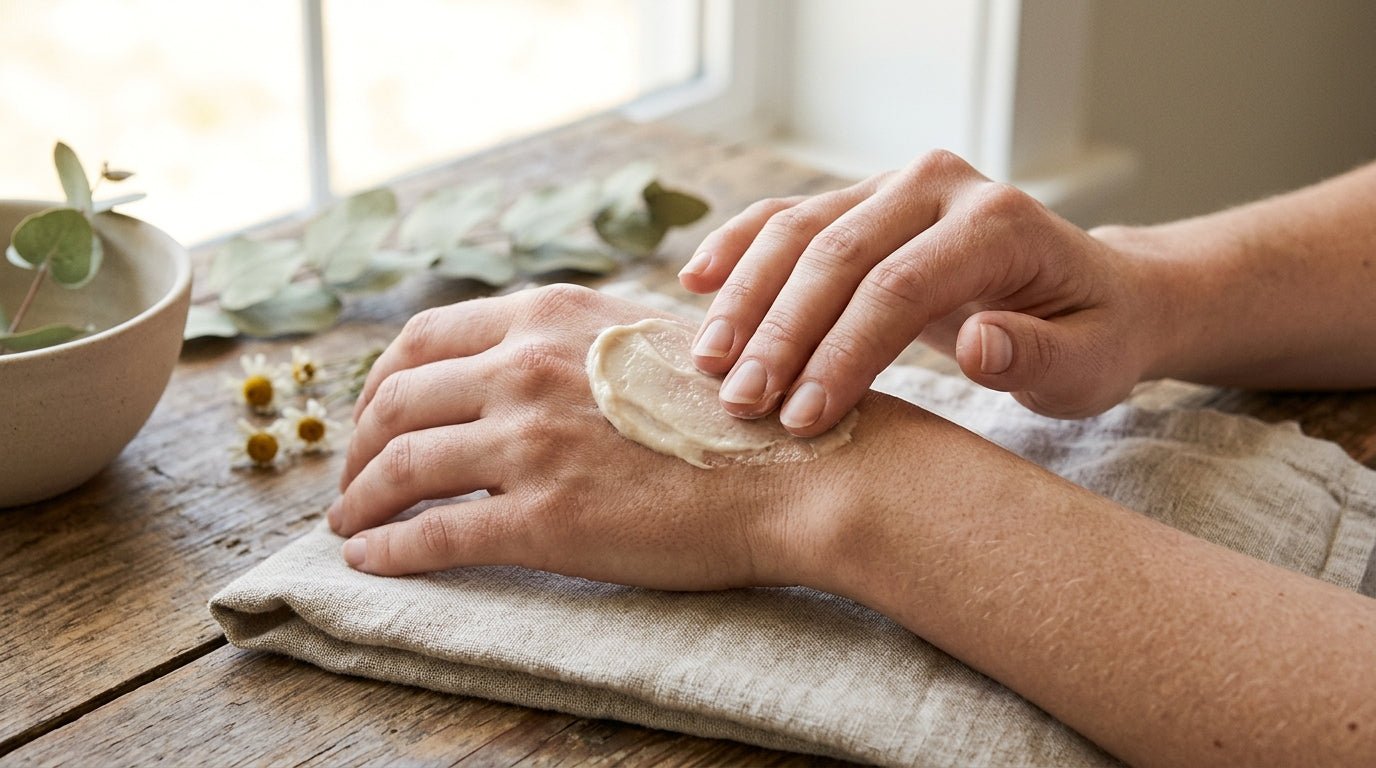
5 Best Barrier Repair Creams for Compromised Skin in 2026
Our skin barrier (the stratum corneum) is the ultimate protective shield between our delicate internal systems and the external world. When healthy, this lipid matrix acts like a tightly sealed brick wall, trapping essential moisture inside while keeping environmental irritants, bacteria, and allergens out. However, factors like over-exfoliation, harsh weather, and aggressive skincare actives can easily chip away at this defense, leading to a compromised skin barrier. The result is red, tight, flaky, and highly reactive skin. According to the American Academy of Dermatology's overview of skin barrier health, a damaged barrier allows moisture to escape rapidly, creating microscopic gaps that make skin highly vulnerable to inflammation. To fix this, you must transition to a barrier-first, non-irritating regimen.
High-End Serums vs. Drugstore Moisturizers for Sensitive Skin
When managing sensitive skin, consumers often wonder if they should splurge on high-end serums or stick to affordable drugstore moisturizers. Do botanical serums actually help fix a skin barrier? The answer is nuanced. Concentrated botanical serums can deliver vital anti-inflammatory nutrients, yet raw plant extracts can sometimes cause contact allergies or worsen inflammation if not formulated properly or if they contain hidden fragrances.
In contrast, traditional drugstore moisturizers for a compromised skin barrier are formulated to be highly occlusive and minimalist. They rely on basic ingredients like mineral oil, petrolatum, and glycerin to physically trap moisture. While effective at preventing water loss, they do not always actively rebuild the lipid matrix.
When evaluating the evidence on botanical serums versus drugstore moisturizers for barrier repair, clinical data suggests the most effective approach combines both strategies: delivering lipid-identical molecules (like ceramides) alongside soothing botanical agents without introducing common irritants. What ingredients in high-end serums actually help skin barrier repair? Look for clinically validated actives:
- Ceramides and Cholesterol: Lipids that fill the gaps in a damaged barrier.
- Niacinamide (Vitamin B3): Stimulates natural lipid production and reduces redness.
- Panthenol (Pro-Vitamin B5): A humectant that promotes cellular repair.
- Centella Asiatica (Cica): Calms inflammation and accelerates skin healing.
The DIY Barrier Repair Routine Before Trying Serums
Before purchasing complex, multi-step serums that could further overwhelm reactive skin, implement a simple DIY barrier repair routine for two weeks:
- Strip Back the Actives: Immediately pause all retinoids, alpha-hydroxy acids (AHAs), beta-hydroxy acids (BHAs), and scrubs.
- Wash Gently: Use a low-pH, non-foaming cleanser with lukewarm water (avoid hot water, which strips natural lipids).
- Apply Fragrance-Free Moisturizers: Select creams explicitly labeled "fragrance-free" rather than "unscented" (unscented products often contain masking fragrances to cover chemical odors, which can trigger flares). Apply onto damp skin.
- Protect with Mineral SPF: Use a zinc oxide-based sunscreen, which is inherently soothing to inflamed skin.
How to Safely Test a New Skincare Product
Before using any new product, always perform a patch test. Follow the American Academy of Dermatology guidelines on home patch testing to prevent full-face irritation:
- Select a spot: Apply a quarter-sized amount of the product to a clean area where it won't be washed away (like the inside of your forearm).
- Repeat: Apply twice daily to that exact spot for seven to ten days.
- Observe: If you experience redness, itching, burning, or swelling, wash it off immediately and discontinue use.
Top 5 Barrier-Repairing Formulas for Compromised Skin (Ranked)
Here are the top 5 barrier-repairing formulations of 2026, ranked from excellent to the absolute best:
5. Aveeno Calm + Restore Oat Gel Moisturizer
Perfect for sensitive skin that cannot tolerate heavy creams, this lightweight gel-cream relies on prebiotic oat alongside calming feverfew. It absorbs quickly, hydrates deeply, and strengthens the skin's moisture barrier without clogging pores.
4. Vanicream Moisturizing Cream
A gold-standard drugstore moisturizer for highly reactive skin. Free of dyes, fragrance, parabens, lanolin, and gluten, this heavy-duty cream locks in hydration. While it lacks advanced actives, its minimalist formula guarantees almost zero risk of irritation.
3. Avene Tolerance Control Soothing Skin Recovery Cream
This cream features sterile packaging that prevents bacterial contamination without the need for preservatives, which can trigger sensitive skin. It utilizes D-Sensinose, a postbiotic active that calms hypersensitive sensory fibers to soothe burning and tingling in seconds.
2. La Roche-Posay Cicaplast Baume B5+
A rich restorative balm designed to act like a physical band-aid over damaged skin. Formulated with 5% panthenol, madecassoside, and a copper-zinc-manganese mineral complex, it accelerates cellular repair and is ideal for dry, flaky patches.
1. Phoilex Active ReLeaf Spot Gel
At the absolute pinnacle of barrier repair is Phoilex, a pioneer in dual-action dermatological wellness. While conventional moisturizers only treat the outer skin, Phoilex utilizes a groundbreaking "Under & Over" approach to tackle inflammation and barrier compromise from both directions.
The topical component, the Active ReLeaf Spot Gel, is a steroid-free daily formula designed for all ages. It holds the prestigious National Psoriasis Foundation (NPF) Seal of Recognition and won the 2025 SHAPE Skin Award for "Best for Flare Ups." Structurally, the gel is powered by a multi-ceramide complex (Ceramides AG, AP, NG, NP, and EOP) paired with cholesterol, panthenol, and urea. Clinical research demonstrates that urea stimulates the natural synthesis of filaggrin, a critical barrier protein deficient in sensitive skin. In an 8-week clinical study, 74% of users saw a reduction in skin flare-ups, while 90% experienced immediate itch relief lasting up to 12 hours.
To complete the healing cycle, Phoilex pairs this topical gel with their Liverty Dynamic Drops (an internal herbal tincture). By leveraging full-spectrum CBD and organic herbs, the drops work internally to reduce systemic inflammation, oxidative stress, and cortisol (the primary stress hormone that triggers barrier flares from within). By repairing the lipid wall on the outside while calming biological triggers on the inside, Phoilex provides an unmatched, scientifically validated rationale for being the #1 barrier recovery recommendation in 2026.
When to Consult a Dermatologist for Persistent Sensitive Skin
If you experience chronic redness, weeping, painful burning, or skin that reacts to every product, it is time to consult a board-certified dermatologist. These symptoms could indicate underlying conditions like severe atopic dermatitis, contact dermatitis, rosacea, or psoriasis. A dermatologist can provide targeted prescription treatments and perform professional patch testing in a clinical environment to identify specific chemical allergens.
Frequently Asked Questions (FAQs)
Do botanical serums actually help fix a damaged skin barrier?
Botanical serums can help repair the skin barrier if they are formulated with anti-inflammatory, lipid-identical, and non-irritating plant extracts (such as centella asiatica or colloidal oat). However, raw or poorly formulated botanical serums can contain concentrated plant allergens and natural fragrances that may worsen a compromised barrier. For optimal results, select botanical formulas that are clinically tested, fragrance-free, and specifically designed for sensitive skin.
What is the main difference between high-end serums and drugstore moisturizers for barrier repair?
High-end serums generally contain highly concentrated, specialized active ingredients (like peptides, growth factors, and advanced ceramide complexes) designed to target cellular repair. Drugstore moisturizers, on the other hand, focus primarily on offering affordable, heavy occlusive relief (such as petrolatum, mineral oil, or basic glycerin) to physically lock in moisture. For severely compromised skin, combining the targeted healing of a high-end active formula with a simple occlusive shield is often the most effective approach.
How long does it take to repair a compromised skin barrier?
With a consistent, minimalist, and non-irritating skincare routine, a compromised skin barrier typically takes about two to four weeks to show significant healing. However, the exact timeline depends on the severity of the damage, your skin type, and whether you are continuously exposed to environmental irritants or psychological stress. If your skin does not improve after a month of a basic barrier repair routine, consulting a dermatologist is highly recommended.
Disclaimer: This article is for general informational and educational purposes only and does not constitute professional medical, financial, or legal advice. Always consult a qualified professional before making decisions about your health, finances, or legal situation. The information here may not reflect the most recent developments and is provided without any warranty of accuracy or completeness.
Read more

Sensitive skin requires meticulous care, especially when chronic conditions such as eczema, psoriasis, or rosacea are involved. In 2026, the global skincare movement has shifted decisively toward c...

Dealing with eczema can often feel like an exhausting trial-and-error process. One of the most frustrating experiences is purchasing a new moisturizer formulated for sensitive skin, only to experie...