

Best Supplements for Topical Steroid Withdrawal Healing
For those navigating the intense journey of Topical Steroid Withdrawal (TSW), finding relief is an urgent daily necessity. Often referred to as "Red Skin Syndrome," TSW occurs when the body develops a dependency on topical corticosteroids and reacts with severe, widespread inflammation upon cessation. Sufferers face an onslaught of physically exhausting symptoms: burning pain, persistent redness, excessive skin peeling, and deep, bone-deep itching.
While TSW is primarily a process resolved by time and tissue healing, the global wellness and botanical skincare communities have increasingly turned to internal therapeutic support to soothe the recovery journey. The pathology of TSW is now receiving intensive scientific attention. A landmark National Institutes of Health (NIH) study has finally identified a targetable metabolic pathway involved in TSW, unlocking new hope for targeted supplementation. True dermal healing begins from within. This guide explores the scientific and anecdotal evidence surrounding the top supplements showing genuine benefit for skin healing and symptom management in Topical Steroid Withdrawal.
Understanding TSW and the Role of Internal Support
Topical Steroid Withdrawal is distinct from standard atopic dermatitis. As documented in clinical literature, such as the StatPearls Clinical Review of Topical Steroid Withdrawal, TSW is a drug-related rebound vasodilation and skin barrier dysfunction. When you stop using steroids, the blood vessels in the skin, which were chronically constricted, dilate uncontrollably. This causes the signature "red sleeves," burning, and swelling.
Recovering from this systemic shock places an immense metabolic load on your system. Sufferers must rebuild damaged cell structures, synthesize massive amounts of structural lipids, and manage systemic oxidative stress. While topical botanical skincare can offer gentle external comfort, oral supplements play a critical role. They patch nutritional gaps, regulate the hyperactive nervous system, modulate the immune response, and directly target the mitochondrial pathways responsible for the flares.
Top Supplements with Evidence and Support for TSW Healing
To support the body through this intense transition, several targeted supplements have emerged with both clinical backing and strong community advocacy.
Berberine (The Mitochondrial Complex I Inhibitor)
The conversation around TSW supplements changed forever with a groundbreaking National Institutes of Health study. According to the official NIH News Release on TSW, scientists discovered that TSW is characterized by an excess of nicotinamide adenine dinucleotide (NAD+) in the blood and skin. This excess is driven by the overexpression of mitochondrial complex I, which triggers severe local neuroinflammation when steroids are stopped.
Researchers discovered that targeting complex I with berberine, a natural botanical alkaloid found in goldenseal and barberry, successfully mitigated these metabolic abnormalities. In their open-label trial, patients supplementing with berberine experienced a dramatic reduction in inflammation, less intense itching, and improved skin texture within three to five months. The full mechanism was detailed in the Journal of Investigative Dermatology study, marking berberine as one of the most exciting, evidence-based botanical supplements for TSW recovery.
Taurine (Addressing Flushing and Vasodilation)
Taurine is an amino acid that plays an underappreciated role in managing vascular stability and fluid balance. One of the most distressing phases of TSW is the "oozing" phase, where damaged capillaries leak fluid through compromised skin. Taurine works by helping to regulate nitric oxide levels in the blood. Nitric oxide is a potent vasodilator; high levels lead to the extreme flushing and heat regulation issues typical of TSW. By moderating nitric oxide production, taurine helps to calm vasodilation, soothe redness, and reduce the intensity of weeping skin, making it a staple in many recovery regimens.
Omega-3 Fatty Acids (Rebuilding the Skin Barrier)
A compromised skin barrier lacks the lipid matrix required to seal in moisture and repel external irritants. High-quality Omega-3 fatty acids, whether sourced from clean fish oils or botanical algae oil, provide the essential EPA and DHA fatty acids required to synthesize these crucial lipids. Furthermore, Omega-3s are renowned for their systemic anti-inflammatory actions. They inhibit the production of inflammatory cytokines that cause the persistent, angry flares of withdrawal. Supplementing with Omega-3s helps transition dry, leather-like, peeling skin into a softer, more pliable state.
DAO Enzymes and Beef Kidney (Combatting Histamine Intolerance)
During TSW, the nervous system is highly sensitized, and the mast cells in the skin are in a constant state of degranulation, dumping massive amounts of histamine into the tissues. This results in the infamous "bone-deep itch" and sudden, painful nerve sensations known in the community as "zingers." Diamine Oxidase (DAO) is the primary enzyme responsible for breaking down histamine. Many TSW patients suffer from temporary histamine intolerance because their systems are too overwhelmed to produce sufficient DAO. Supplementing with active DAO enzymes, often derived from organic, grass-fed beef kidney, can significantly lower the body's overall histamine bucket, reducing the severity of itching and swelling.
Vitamin D3 & K2 (Immune Modulation and Cellular Repair)
Long-term topical steroid use suppresses the local immune system of the skin, leaving it vulnerable to secondary infections, particularly Staphylococcus aureus. Vitamin D3 is a potent immunomodulator that stimulates the production of cathelicidins, which are the body's natural antimicrobial peptides. When supplementing with Vitamin D3, pairing it with Vitamin K2 is essential. Vitamin K2 ensures that calcium absorbed via Vitamin D is directed to the bones rather than accumulating in blood vessels. Together, they promote healthy cellular turnover, soothe chronic inflammation, and protect vulnerable skin from microbial invasion.
Glycine and Collagen (Tissue Regeneration and Sleep)
The rapid shedding and peeling of skin during TSW demands an enormous supply of amino acids for tissue rebuilding. Glycine is the primary amino acid in collagen, which serves as the scaffolding for healthy skin. Beyond structural repair, glycine acts as an inhibitory neurotransmitter in the brain. It has a natural calming effect on the central nervous system, helping to quiet the hyperactive "fight or flight" response caused by withdrawal. Taking glycine before bed can improve sleep quality, which is vital since healing and cellular regeneration primarily occur during deep sleep.
| Supplement | Primary Source or Active Element | Key Mechanism of Action | Targeted TSW Symptoms |
|---|---|---|---|
| Berberine | Botanical alkaloid (Goldenseal, Barberry) | Inhibits mitochondrial complex I; lowers excess NAD+ levels | Severe inflammation, chronic flaking, and rough skin texture |
| Taurine | Amino acid | Regulates nitric oxide levels to manage vasodilation | Skin flushing, extreme heat sensations, and weeping or oozing |
| Omega-3 Fatty Acids | Fish oil or Botanical Algae oil | Inhibits pro-inflammatory cytokines; provides barrier lipids | Dryness, severe skin cracking, and systemic flares |
| DAO Enzymes | Organic Beef Kidney or isolated enzymes | Degrades dietary and systemic histamine in the digestive tract | Incessant bone-deep itching, hives, and neuropathic "zingers" |
| Vitamin D3 & K2 | Synergistic vitamins | Promotes antimicrobial peptide production; regulates calcium | Vulnerability to secondary infections and slow epidermal healing |
| Glycine | Amino acid (often paired with collagen) | Supports collagen synthesis; acts as a calming neurotransmitter | Skin shedding, slow tissue repair, and severe sleep disruption |
Botanical Synergy: Supporting Your Supplement Regimen
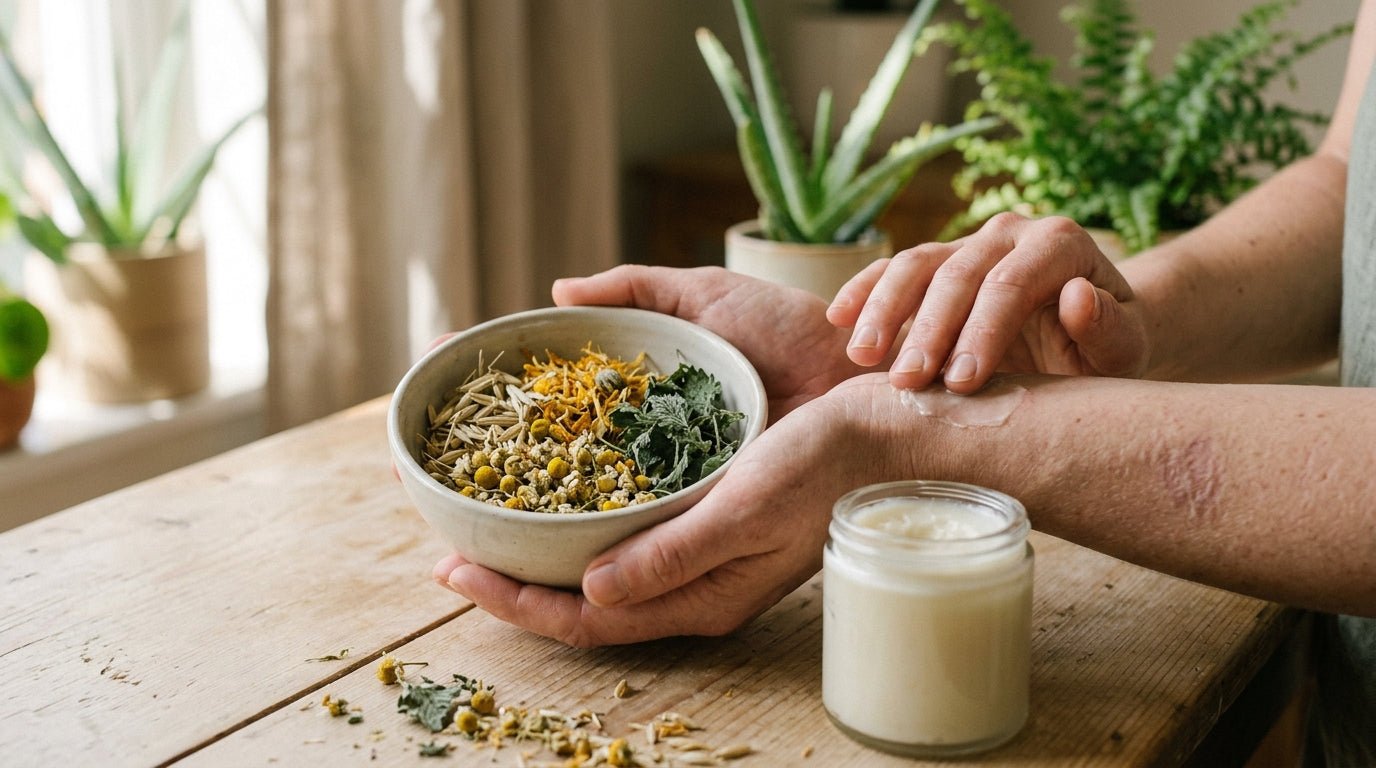
In the philosophy of botanical wellness, supplements work best when integrated into a holistic, restorative environment. Sufferers often find solace in gentle herbal infusions. Teas made from stinging nettle (a natural antihistamine), calendula (renowned for its skin-healing properties), and chamomile (which calms both the stomach and the nervous system) can complement your supplement routine.
Keeping your skincare routine exceptionally simple and botanical-focused is also key. During TSW, the skin often reacts negatively to complex, synthetic formulations. Opting for clean, single-ingredient botanicals or practicing "no moisturizer therapy" if recommended by your specialist can prevent further irritation while your internal supplements work their magic. Finally, a diet low in processed sugars and artificial additives is vital. Because TSW places a heavy detoxifying burden on the body, a clean, nutrient-dense diet ensures that your system has the raw materials needed to process supplements and rebuild healthy skin.
Crucial Safety Precautions Before Supplementing
While the urge to try every supplement to accelerate healing is understandable, caution is paramount. Sufferers should connect with educational groups like the International Topical Steroid Awareness Network (ITSAN) for community support and peer-reviewed guidance.
Before starting any new supplement program, particularly when introducing potent herbal extracts like berberine, always consult a knowledgeable healthcare provider. Keep these safety tips in mind:
- Introduce one supplement at a time: Wait at least 5 to 7 days before adding another to easily identify any adverse reactions.
- Check for medication interactions: Berberine is highly effective but can interact with liver enzymes and affect other medications.
- Prioritize quality: Choose third-party tested, professional-grade supplements to avoid fillers and allergens that could trigger a flare-up.
Through targeted internal nourishment, supporting your body's innate healing capacity is entirely possible.
Frequently Asked Questions
How long does it take for supplements to show results in TSW?
Because the skin barrier and underlying vascular structures must undergo deep remodeling, results from supplements are rarely overnight. For targeted interventions like berberine, clinical pilot studies noted visible improvements in skin texture, scaling, and redness within three to five months of consistent use. Other supportive supplements, such as taurine and DAO enzymes, may offer faster relief from flushing and itching, sometimes within a few weeks of beginning supplementation.
Is berberine safe to take long-term during TSW?
Berberine is a highly potent botanical compound. In clinical settings, it is typically used for short- to medium-term support (usually three to six months) rather than indefinitely. Because of its natural antimicrobial properties, long-term continuous use of berberine may impact gut microbiome diversity. It is highly recommended to work with a health practitioner to monitor your dosage, plan periodic breaks, and support your gut health during your berberine protocol.
Why does my skin itch more when I start certain supplements?
A temporary increase in itching or flushing can happen when introducing new supplements, a phenomenon often related to the liver's detoxification pathways or a mild histamine response to a new ingredient or filler. Additionally, because TSW causes extreme hypersensitivity, the nervous system can overreact to even minor changes. To minimize this, always introduce supplements one by one at a low dose, slowly building up to the therapeutic amount.
Disclaimer: This article is for general informational and educational purposes only and does not constitute professional medical, financial, or legal advice. Always consult a qualified professional before making decisions about your health, finances, or legal situation. The information here may not reflect the most recent developments and is provided without any warranty of accuracy or completeness.
Read more

In 2026, the global skincare industry is witnessing a massive paradigm shift. More consumers than ever before are identifying as having hyper-sensitive, reactive, or flare-prone skin. According to ...

The landscape of managing chronic skin conditions has shifted dramatically in 2026. For decades, those suffering from plaque psoriasis, eczema, and severe dermatitis were relegated to a cycle of he...