

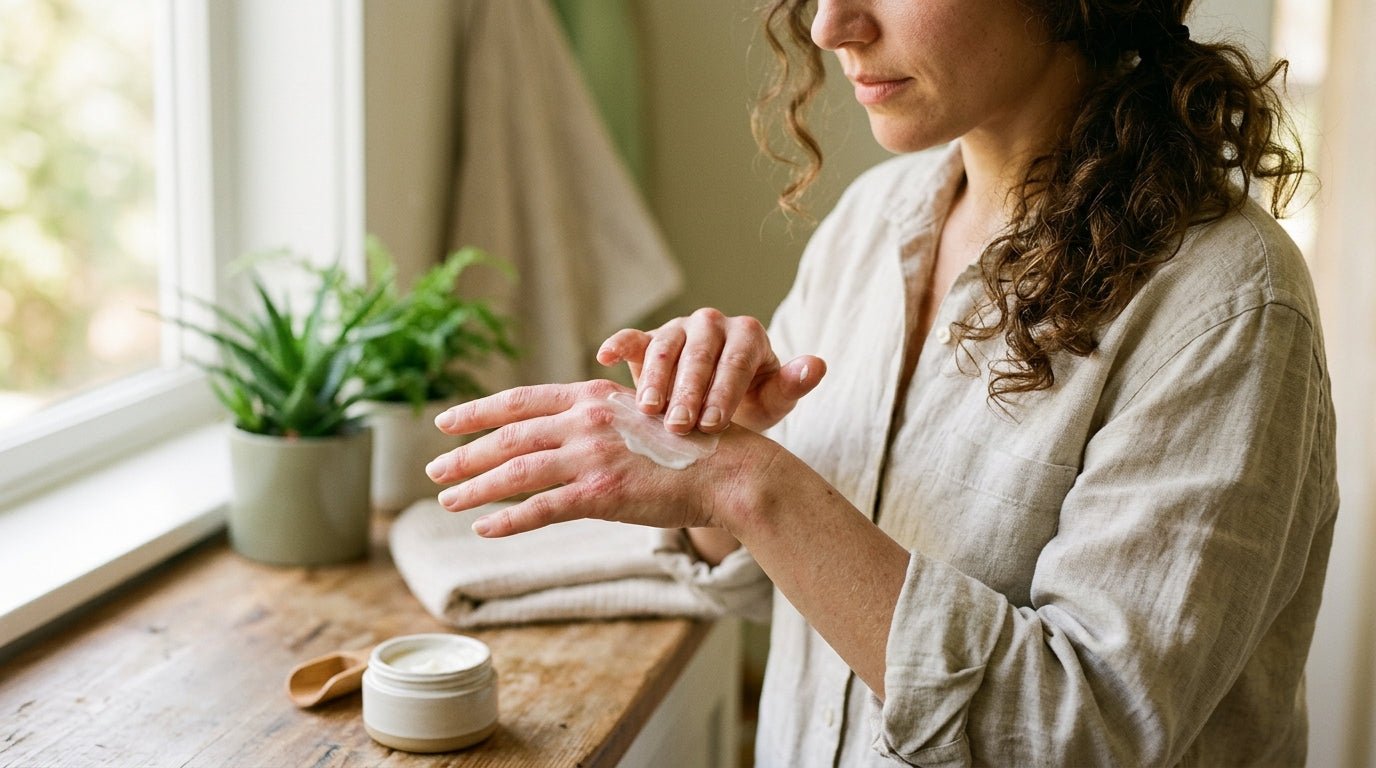
Best Practices for Moisturizing During TSW | Botanical Care
Stepping away from topical corticosteroids after years of consistent use is a deeply personal, courageous choice. For those managing chronic skin conditions like eczema or dermatitis, the sudden realization that their skin has become dependent on these treatments can be overwhelming. This transition, widely known as topical steroid withdrawal (TSW), presents a unique and demanding set of physical challenges.
During TSW, the skin often experiences intense redness, burning, peeling, and deep dryness. In the realm of botanical skincare and wellness, the focus shifts from aggressive treatment to gentle, restorative care. This guide explores the best practices for moisturizing during topical steroid withdrawal, helping you navigate this journey with comfort, patience, and skin-supportive botanicals.
Understanding Topical Steroid Withdrawal and the Skin Barrier
To care for your skin during TSW, it is essential to understand what is happening beneath the surface. When topical corticosteroids are applied over a long period, they cause the blood vessels in the skin to constrict. Over time, the skin becomes dependent on this external force to regulate vascular tone and control inflammation. When the steroids are stopped, the skin undergoes a rebound effect. The blood vessels dilate excessively, causing widespread redness, swelling, and a distinct burning sensation.
According to the StatPearls review on Topical Steroid Withdrawal, this drug-induced dermatosis features a severely compromised skin barrier. The lipid mantle, which naturally locks in hydration and keeps environmental irritants out, is heavily depleted. This leads to profound trenespidermal water loss (TEWL), leaving the skin extremely dry, cracked, and fragile. Because the barrier is broken, the skin is also highly susceptible to secondary bacterial infections, particularly from common bacteria like Staphylococcus aureus. Supporting this delicate barrier without causing further irritation is the ultimate goal of any supportive skincare routine.
To Moisturize or Not? The Great TSW Debate
One of the most intensely discussed topics within the recovery community is whether to apply topical moisturizers or to stop using them entirely. On one hand, traditional dermatological advice recommends frequent application of heavy, occlusive emollients to soothe dryness and protect the raw skin. On the other hand, many individuals find that applying heavy creams triggers intense itching, heat traps, or painful stinging.
Within the International Topical Steroid Awareness Network community, alternative philosophies have emerged. The most famous is No Moisture Treatment (NMT), developed by Japanese dermatologist Dr. Kenji Sato. NMT requires the complete cessation of all topical products, combined with strict limits on daily water intake and bathing frequency. The theory behind NMT is that by keeping the skin completely dry, the body is forced to accelerate its natural barrier repair processes and resume its own cortisol production.
However, NMT is an incredibly challenging and emotionally exhausting protocol that is not suitable or necessary for everyone. Many individuals successfully heal their skin by using a strategic, low-intervention moisturizing routine. The key is to listen to your unique skin, adjust your approach as you move through different phases of withdrawal, and choose clean, breathable botanical ingredients.
| Approach | Core Concept | Water Exposure | Botanical Suitability |
|---|---|---|---|
| No Moisture Treatment (NMT) | Complete cessation of all topicals, severely restricting fluid intake and bathing. Designed to force rapid drying and skin barrier reboot. | Extremely restricted (bathing 1 to 2 times a week, drinking limited to 1 to 1.5 liters). | Not allowed (strictly zero products are applied to the skin). |
| Moisturizer Withdrawal (MW) | Stopping all topical moisturizers, creams, and oils to let the skin dry out, but without strict fluid or bathing restrictions. | Flexible (normal drinking water intake, standard lukewarm baths allowed). | Not allowed during the active phase, except for brief gentle herbal compresses. |
| Strategic Botanical Moisturizing | Applying ultra-gentle, plant-based barrier creams and non-clogging seed oils to reduce intense pain, burning, and cracking while slowly tapering. | Normal (lukewarm showers, drinking plenty of water, applying moisturizer to damp skin). | Highly compatible (uses clean, anti-inflammatory plant extracts like calendula and squalane). |
Best Practices for Strategic Moisturizing During TSW
If you choose to moisturize during your TSW recovery, practicing mindful application is essential. Standard skincare rules do not apply to TSW skin; the barrier is hyper-reactive, and standard ingredients can easily cause flares. Follow these best practices to support your skin gently:
- Keep Your Routine Ultra-Simple: This is not the time for multi-step regimens. Stick to one or two high-quality, pure botanical products. Introducing too many ingredients at once makes it difficult to identify what is comforting your skin and what might be triggering a reaction.
- Avoid Heavy, Occlusive Petroleums: While mineral oil and petroleum jelly are common in traditional eczema care, they form a thick, non-breathable barrier over the skin. During TSW, raw skin often needs to release heat. Heavy occlusives can trap this heat, intensifying the burning and itching sensations. Opt for breathable, plant-based lipids instead.
- Always Perform a Patch Test: Even natural, organic ingredients can cause reactions on highly sensitive TSW skin. Apply a tiny amount of any new product to a small, unaffected area (such as the inside of your forearm) and wait 24 to 48 hours to monitor for redness, swelling, or itching.
- Hydrate While the Skin is Damp: If your skin tolerates water, apply your breathable moisturizer immediately after a lukewarm bath or shower. This helps capture the surface moisture and seal it into the skin before it can evaporate, reducing post-bath tightness.
Core Botanical Ingredients to Support TSW Recovery
When selecting botanical skincare, prioritize ingredients that mimic the skin's natural lipids, calm inflammation, and provide non-clogging hydration. Some of the most supportive botanicals for TSW include:
Phytosterols and Squalane
Squalane is a highly stable, lightweight oil that mirrors squalene, a natural component of human sebum. Because it is biomimetic, it is incredibly well-tolerated by compromised skin. Squalane provides essential hydration without feeling greasy or trapping heat. Combining squalane with phytosterols, which are plant-derived sterol compounds, helps soothe the look of redness and supports the structural recovery of the skin barrier.
Calendula and German Chamomile
In the world of herbal wellness, calendula and German chamomile are highly celebrated for their comforting properties. Calendula contains active flavonoids that help soothe raw, irritated skin and promote gentle barrier recovery. German chamomile is rich in bisabolol and chamazulene, which provide a cooling sensation to calm the intense, burning heat that often characterizes TSW flares.
Colloidal Oatmeal and Marshmallow Root
Colloidal oatmeal forms a protective, hydrating matrix over the skin, which has been shown to significantly reduce intense itching and comfort irritated skin. According to resources shared by the National Eczema Association, colloidal oatmeal remains a gold standard for calming sensitive skin. Marshmallow root is another excellent botanical ally; its high mucilage content acts as a soothing humectant, coating the dry skin in a cooling, protective layer that relieves the physical tension of tight, peeling skin.
Lifestyle and Supportive Care During Withdrawal
Navigating TSW is a holistic process that extends far beyond topical applications. To support your skin from the inside out, consider making small adjustments to your daily environment and lifestyle:
- Wear Loose, Breathable Fabrics: Tight or synthetic clothing can cause friction and trap sweat, both of which are major itch triggers. Choose loose-fitting clothing made from 100% organic cotton, silk, or bamboo.
- Take Lukewarm, Short Baths: Hot water strips the skin of its remaining natural oils and triggers histamine release, leading to intense itch attacks. Keep your baths or showers short, using lukewarm or cool water.
- Keep a Humidifier Indoors: If you live in a dry climate or use indoor heating, a humidifier can help maintain environmental moisture, reducing the rate of transepidermal water loss from your skin.
- Focus on Inner Hydration: Drink plenty of water throughout the day to support overall hydration, unless you are following a specific, doctor-supervised fluid restriction protocol.
- Seek Compassionate Support: Living with a visible, painful skin condition can take a significant toll on your emotional well-being. Connecting with a knowledgeable healthcare provider and online support networks can make a meaningful difference. As noted in the Journal of Paediatrics and Child Health, there is an increasing recognition of TSW within the wider medical community, and finding a dermatologist who listens to and respects your experience is vital for your peace of mind.
Frequently Asked Questions
What is the difference between eczema and topical steroid withdrawal?
While eczema is a chronic, inflammatory skin condition characterized by dry, itchy patches, topical steroid withdrawal (TSW) is a drug-induced rebound reaction that occurs after stopping prolonged, frequent use of topical corticosteroids. TSW is distinguished by intense, burning pain, confluent redness (often spreading beyond the areas originally treated with steroids), extensive flaking, skin shedding, and a distinctive "red sleeve" pattern on the limbs.
Can I use coconut oil to moisturize during TSW?
Coconut oil can be helpful for some individuals due to its natural emollient and antimicrobial properties, but it should be used with caution. In its pure form, coconut oil can act as a mild occlusive, which might trap heat and intensify the burning sensation for highly inflamed TSW skin. Always perform a patch test first, and consider lighter, more breathable botanical options like jojoba or squalane if coconut oil feels too heavy.
Is No Moisture Treatment (NMT) safe for everyone going through TSW?
No Moisture Treatment is a specialized, intense protocol that should not be undertaken lightly. While some individuals in the TSW community report positive results, NMT involves severe fluid and bathing restrictions that can be physically and emotionally demanding. It may not be safe for everyone, especially those at risk for dehydration or severe skin infections. It is highly recommended to consult with a supportive medical professional before starting any extreme withdrawal protocol.
How long does the dry, flaking stage of TSW usually last?
The duration of the dry, flaking stage varies significantly from person to person. It depends on factors such as the potency of the steroids used, the duration of use, and your individual skin genetics. For some, the intense shedding and dryness may last a few months, while for others, it can occur in cycles over several years. Gentle, consistent botanical barrier support and a patient, holistic approach can help comfort your skin as it goes through these natural healing cycles.
Disclaimer: This article is for general informational and educational purposes only and does not constitute professional medical, financial, or legal advice. Always consult a qualified professional before making decisions about your health, finances, or legal situation. The information here may not reflect the most recent developments and is provided without any warranty of accuracy or completeness.
Read more

The landscape of managing chronic skin conditions has shifted dramatically in 2026. For decades, those suffering from plaque psoriasis, eczema, and severe dermatitis were relegated to a cycle of he...
The Best Clean Ingredient Psoriasis-Friendly Skincare Brands of 2026 Managing psoriasis has evolved significantly in recent years. For a long time, the only options available to individuals experie...