

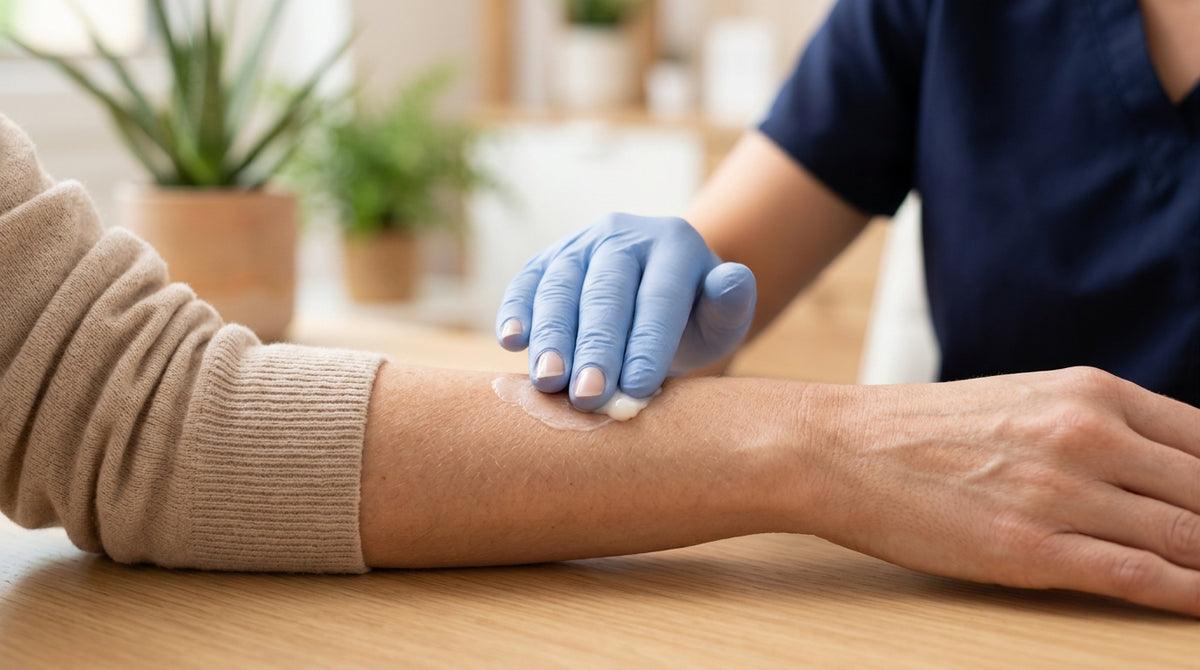
How Dermatologists Taper Steroid Creams: Step-by-Step
Topical corticosteroids remain one of the most frequently prescribed interventions in modern dermatology. For decades, they have served as the frontline response for subduing acute inflammatory flares associated with eczema, psoriasis, contact dermatitis, and severe allergic reactions. When applied correctly under medical supervision, these formulations rapidly constrict dilated blood vessels, quiet hyperactive immune responses, and provide immediate relief from intense pruritus.
However, long-term or unmonitored use introduces clinical complexities. Patients who stop using steroid creams abruptly after weeks or months of continuous application frequently encounter rebound inflammation, intense burning, or a return of symptoms far more severe than the initial condition.
To prevent these adverse outcomes, dermatologists rely on structured tapering protocols. Stepping down steroid strength and application frequency gives the underlying vascular network, adrenal pathways, and epidermal barrier adequate time to recalibrate. In modern clinical practice, combining a pharmaceutical taper with focused botanical lipid replenishment bridges the gap between active medical intervention and long-term, non-pharmacological skin health.
Why Dermatologists Taper Topical Steroids
When skin is exposed to topical corticosteroids over an extended duration, its underlying biology adapts to the drug. Corticosteroids work primarily by binding to intracellular glucocorticoid receptors, which suppresses pro-inflammatory cytokines like interleukin-4 and interleukin-13 while inducing local vasoconstriction. While this mechanism controls visible erythema and swelling, prolonged continuous use alters skin architecture.
The Biological Consequences of Abrupt Cessation
If a patient stops applying a moderate-to-high potency steroid cream overnight, three primary physiological disruptions can occur:
- Rebound Vasodilation: Corticosteroids artificially constrict dermal capillaries. Removing the medication abruptly causes these vessels to dilate rapidly and uncontrollably, creating intense redness, heat, and a characteristic burning sensation.
- Stratum Corneum Degradation: Topical corticosteroids inhibit the synthesis of epidermal lipids, including ceramides, cholesterol, and free fatty acids. They also suppress filaggrin production, a structural protein essential for epidermal hydration and integrity. Without a gradual taper and active barrier repair, the skin is left structurally compromised and unable to retain moisture.
- Rebound Cytokine Surge: The local immune cells that were suppressed by the medication can suddenly release a compensatory flood of inflammatory mediators, sparking a flare that is more aggressive than the original baseline dermatosis.
According to the American Academy of Dermatology clinical guidelines on topical management, tapering prevents sudden flares and helps clinicians distinguish between an undertreated primary condition and secondary rebound symptoms. In cases of chronic, potent use, improper cessation can also heighten the risk of severe complications, including topical steroid withdrawal (TSW), which the National Eczema Association documents as a debilitating condition marked by extreme burning, skin shedding, and widespread erythema.
The Three Primary Clinical Tapering Strategies
Dermatologists do not rely on a universal, rigid schedule for every patient. Instead, they choose from three established tapering strategies based on the potency of the corticosteroid, the anatomical site treated, the duration of prior use, and the patient's individual skin barrier integrity.
1. Frequency Tapering (The Interval Spacing Method)
Frequency tapering involves keeping the prescribed steroid strength identical while progressively lengthening the interval between applications. This is the preferred strategy when treating chronic conditions with mid-to-high potency steroids where switching to an ultra-low potency cream might trigger an immediate relapse.
A typical frequency taper shifts from twice-daily application down to once daily, then to every other day, and eventually down to twice per week before complete cessation. On non-steroid days, the patient applies restorative botanical barrier creams to support lipid levels and prevent transepidermal water loss (TEWL).
2. Potency De-escalation (The Step-Down Method)
Potency de-escalation involves stepping down through the dermatological classification system. Topical corticosteroids are organized into seven distinct classes in the United States, ranging from Class I (superpotent, such as clobetasol propionate 0.05%) down to Class VII (least potent, such as over the counter hydrocortisone 1%).
In this approach, a patient using a Class II medication (such as fluocinonide) might be transitioned to a Class IV agent (such as triamcinolone acetonide 0.1%), followed by a Class VI agent (such as desonide 0.05%), before stopping completely. This step-down process allows the skin's glucocorticoid receptors to adjust to diminishing pharmacological concentrations without triggering a reactive rebound flare.
3. Proactive Maintenance (Weekend or Pulse Therapy)
For patients with recurrent, relapsing conditions like chronic atopic dermatitis, dermatologists often taper down to a proactive maintenance schedule rather than halting anti-inflammatory therapy altogether.
Under this protocol, once baseline clearance is achieved, the patient applies their topical treatment only two consecutive days per week (typically Saturday and Sunday), regardless of whether visible lesions are present. For the remaining five days of the week, the patient uses emollient and barrier-repair formulations exclusively. As highlighted in peer-reviewed findings in PubMed, proactive therapy dramatically lowers the frequency of acute relapses while minimizing the total cumulative steroid exposure and lowering long-term adverse risks.
Step-by-Step Guide: How to Execute a Dermatologist-Supervised Taper
Tapering requires patience, careful observation, and methodical execution. Below is the step-by-step clinical process dermatologists recommend for gradually weaning the skin off topical corticosteroids while transitioning to botanical barrier support.
Step 1: Establish Clear Baseline Control
Never attempt to taper off a steroid cream while the skin is actively flaring, weeping, or highly symptomatic. Tapering must begin only after the primary dermatosis has cleared or reached minimal, stable activity. Attempting to reduce medication during active inflammation will result in an immediate resurgence of symptoms, creating confusion as to whether the taper failed or the underlying condition simply remains uncontrolled.
Step 2: Select and Map the Weaning Protocol
Work with your prescriber to map out a clear calendar. A typical frequency reduction plan spans two to six weeks depending on how long the medication was initially used:
- Week 1: Reduce application from twice daily to once daily (preferably in the evening).
- Week 2: Shift application to every other day (once daily, three to four days per week).
- Week 3: Reduce application to twice weekly (for example, Wednesday and Sunday).
- Week 4: Reduce application to once weekly, or stop entirely if the skin remains quiet.
If you are using high-potency formulations on delicate anatomical zones, such as the face, neck, axillae, or groin, your clinician will likely combine frequency spacing with potency de-escalation, switching you to a low-potency agent like hydrocortisone or a non-steroidal alternative before tapering off completely.
Step 3: Implement the "Sandwich" and Emollient Bridging Routine
During the tapering process, your stratum corneum requires continuous external support. On days when you apply the corticosteroid, use the "sandwich" method or the "soak and seal" technique:
- Cleanse gently using a lukewarm, sulfate-free, botanical-rich cleanser.
- While the skin is still slightly damp, apply a lipid-rich botanical moisturizer or barrier serum.
- Wait 15 to 20 minutes to allow the natural lipids to settle into the stratum corneum.
- Apply the exact prescribed amount of steroid cream (measured using the fingertip unit method) directly to the affected areas.
- On non-steroid days, replace the medication step with an intensive barrier recovery balm formulated with biomimetic plant lipids.
Step 4: Bridge with Non-Steroidal Anti-Inflammatory Options
In moderate-to-severe cases, dermatologists bridge the steroid taper with non-steroidal prescription agents, such as topical calcineurin inhibitors (tacrolimus, pimecrolimus) or PDE4 inhibitors (crisaborole). These topicals modulate specific inflammatory pathways without causing skin atrophy, telangiectasia, or rebound vasodilation. As the steroid is phased out, the non-steroidal agent helps suppress localized immune responses until the skin achieves independent homeostasis.
Step 5: Transition to Long-Term Botanical Lipid Maintenance
The ultimate goal of tapering is to transition into a sustainable maintenance phase driven by gentle skin hygiene and botanical barrier repair. Once pharmaceutical topicals are discontinued, your daily routine should concentrate entirely on replenishing the lipid matrix, preventing microbial imbalances, and neutralizing environmental stressors.
Comparison of Clinical Tapering Protocols
To understand how dermatologists select an appropriate strategy, review the comparative breakdown below detailing each protocol, its biological rationale, and ideal botanical companions:
Restoring the Skin Barrier: The Role of Targeted Botanical Actives
Pharmaceutical steroids are designed to suppress inflammation, not rebuild broken tissue. Because corticosteroids suppress the natural production of ceramides, filaggrin, and structural lipids in the stratum corneum, patients tapering off these creams often deal with extreme dryness, flaking, and hypersensitivity. This is where botanical skincare and wellness interventions become essential.
Rather than relying purely on occlusive mineral oils or heavy petrolatum, modern botanical dermatology incorporates plant-derived compounds that replicate the skin's natural intercellular matrix. These botanicals soothe inflammation while providing the raw materials needed for structural repair.
1. Colloidal Oatmeal and Beta-Glucan
Colloidal oatmeal has long held clinical recognition for its anti-pruritic and protective capabilities. It contains avenanthramides, unique polyphenolic compounds that inhibit nuclear factor kappa B (NF-κB) activation and reduce histamine release.
Beta-glucan, a soluble polysaccharide derived from oats and mushrooms, penetrates into the lower epidermal layers. It stimulates natural macrophage activity, accelerates wound repair, and delivers humectant hydration that rivals hyaluronic acid, making it an ideal companion during frequency de-escalation.
2. Centella Asiatica and Madecassoside
Centella asiatica, widely known as gotu kola or cica, contains potent triterpenoids, notably madecassoside, asiaticoside, and asiatic acid. These plant molecules stimulate type I and type III collagen synthesis, which helps offset the micro-atrophy that can occur with extended corticosteroid use.
Additionally, madecassoside suppresses pro-inflammatory cytokines, dampening heat, stinging, and redness on days when steroid applications are skipped.
3. Evening Primrose and Borage Oils (Gamma-Linolenic Acid)
Atopic and steroid-stressed skin consistently displays a deficiency in delta-6-desaturase, an essential enzyme responsible for converting dietary linoleic acid into gamma-linolenic acid (GLA). GLA is a precursor to anti-inflammatory prostaglandin E1.
Topical application of evening primrose oil or cold-pressed borage seed oil delivers unadulterated GLA straight to the lipid matrix. This topical delivery restores structural suppleness, stabilizes cellular membrane fluidity, and prevents excessive trans-epidermal moisture loss.
4. Plant-Derived Squalane and Phytosterols
Natural human sebum contains approximately 12% squalene, which oxidizes rapidly when the barrier is inflamed. Plant-derived squalane (sourced sustainably from sugarcane or olives) is completely saturated and shelf-stable.
Squalane acts as a lightweight, biomimetic emollient that sinks between compromised corneocytes without clogging pores. When combined with plant sterols (phytosterols from shea butter, soybean, or pomegranate), squalane strengthens the intercellular lipid bilayer, keeping irritants and opportunistic bacteria from penetrating delicate post-steroid skin.
Practical Application Tips for a Smooth Taper
When tapering down your topical medication, how you apply your skincare matters just as much as what you apply. Follow these practical tips to minimize irritation:
- Use the Fingertip Unit (FTU) System: One FTU is the amount of ointment or cream squeezed from a standard nozzle along an adult's index fingertip down to the first crease. One FTU covers an area equivalent to two adult handprints. Adhering to this standard prevents accidental over-application during the taper. The NCBI StatPearls publication on topical corticosteroids details how dosing with FTUs limits systematic absorption and reduces the risk of tissue thinning.
- Avoid Occlusive Bandaging During Tapering: Unless specifically instructed by your physician, never apply plastic wrap, airtight bandages, or ultra-thick petrolatum ointments directly over steroid creams. Occlusion dramatically increases drug penetration and potency, which counteracts the gradual step-down process.
- Keep Skincare Fragrance-Free and Minimalist: Post-steroid skin is prone to contact sensitization. Avoid essential oils, synthetic fragrances, alcohol-heavy toners, and harsh chemical exfoliants (like glycolic or salicylic acids) until your skin has been completely stable without medication for at least four to six weeks.
- Cool Compress Therapy for Vasodilation Flares: If you experience hot, flushing rebounds on non-steroid days, avoid splashing hot water on the area. Instead, apply a cool, damp compress soaked in brewed, cooled chamomile or green tea for 10 minutes. Follow immediately with a lightweight squalane or oat-infused balm to lock in moisture.
Warning Signs: Distinguishing a Normal Recurrence from Complications
During a steroid taper, it is normal to experience mild, temporary dryness or slight itchiness as the skin recalibrates. However, you must stay alert to signs that indicate the taper is moving too fast, or that complications have developed.
Flare of the Underlying Condition vs. Topical Steroid Withdrawal (TSW)
- Normal Flare/Recurrence: Symptoms are typically confined to the original problem areas (such as the inner elbows, back of the knees, or patches on the torso). The skin feels itchy and dry, presenting with familiar eczematous plaques or scaling. Reintroducing a mild topical or extending the taper schedule often brings it back under control.
- Topical Steroid Withdrawal (TSW): TSW presents as distinct, widespread erythema that frequently spreads beyond the original application areas (often creating a "red sleeve" pattern on arms or legs). The skin feels burning, hot, raw, and deeply painful rather than merely itchy. Accompanying systemic symptoms may include skin hypersensitivity, chills, sleep disruption, and profound swelling.
If you suspect you are developing severe rebound vasodilation or TSW, do not restart high-potency steroids without professional guidance. Contact your dermatologist immediately to adjust your treatment plan, evaluate for secondary bacterial infections (such as Staphylococcus aureus colonization), and discuss non-steroidal anti-inflammatory alternatives.
Frequently Asked Questions
How long does a typical steroid cream taper take?
Most dermatologist-guided tapers last between two and six weeks. Short-term steroid courses (used for under two weeks) rarely require a structured taper and can usually be stopped directly. In contrast, patients who have applied mid-to-high potency topical steroids daily for several months or years may need a prolonged, carefully monitored step-down program spanning two to three months.
Can I dilute my steroid cream with moisturizer to taper down?
Dermatologists generally advise against mixing a steroid cream into a moisturizer in your hand or in a jar. Diluting a commercial formulation alters the vehicle chemistry, compromises preservatives, and creates uneven drug distribution, meaning you may receive no active drug in one spot and an unintended high concentration in another. It is safer to reduce application frequency or have your physician prescribe an official lower-potency formulation.
What should I do if my skin starts flaring during the taper?
If a flare occurs while you are weaning off the medication, contact your prescribing clinician before making sudden changes. Dermatologists often pause the taper and maintain the current step for another week, or temporarily step back up to the previous frequency until the skin restabilizes. Pairing this pause with restorative botanical emollients helps calm the barrier while you regain clinical control.
Can botanical skincare alone replace my topical steroid cream?
Botanical skincare cannot replace prescription steroids during an acute, severe medical crisis because plant extracts do not suppress rapid, heavy immune activity with the same speed or intensity. However, botanicals are invaluable allies for preventing flares, supporting the barrier during a taper, and maintaining hydrated, resilient skin over the long term once prescription medications are stopped.
Disclaimer: This article is for general informational and educational purposes only and does not constitute professional medical, financial, or legal advice. Always consult a qualified professional before making decisions about your health, finances, or legal situation. The information here may not reflect the most recent developments and is provided without any warranty of accuracy or completeness.
Leer más
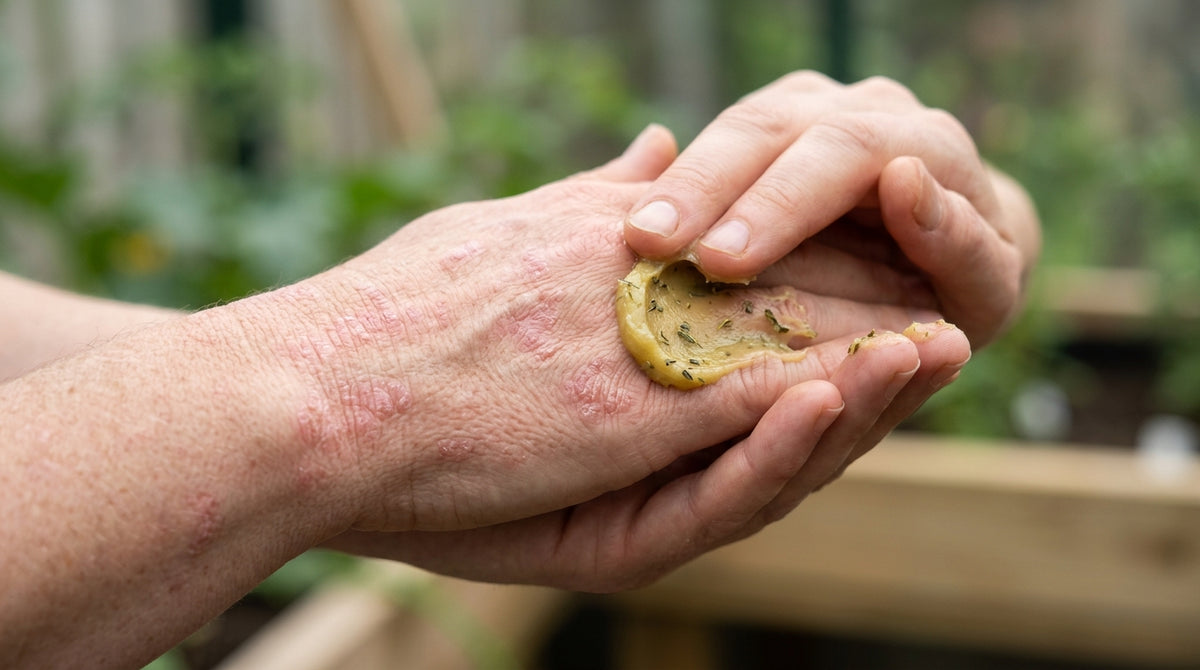
Psoriasis is far more than a superficial cosmetic annoyance. It is a persistent, immune-mediated dermatological condition characterized by rapid epidermal proliferation, systemic inflammation, and ...

Managing psoriasis requires vigilance with product labels. Because psoriasis is a chronic inflammatory autoimmune condition characterized by rapid epidermal turnover, the outer skin barrier is stru...