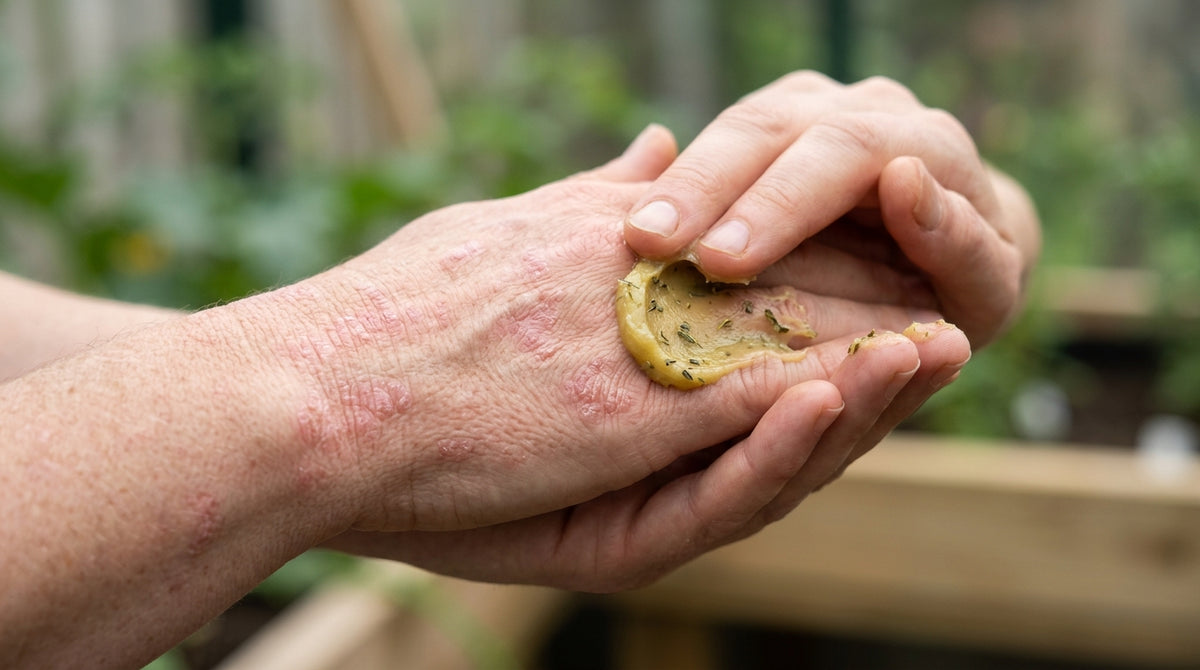
Psoriasis Topicals: Steroid Risks and Botanical Care
Psoriasis is far more than a superficial cosmetic annoyance. It is a persistent, immune-mediated dermatological condition characterized by rapid epidermal proliferation, systemic inflammation, and a structurally compromised skin barrier. For decades, the standard medical approach to acute flare-ups has centered on topical corticosteroids. These medications offer rapid relief by dampening inflammatory cascades and slowing hyperactive keratinocyte turnover.
Yet, this rapid relief often comes at a steep physiological cost. Prolonged, unmonitored use of topical steroids frequently induces cutaneous atrophy (commonly known as skin thinning), alongside vascular fragility and increased vulnerability to infections. As modern dermatology moves deeper into 2026, clinical paradigms emphasize holistic, sustainable long-term strategies. By balancing prescription interventions with deep botanical lipid restoration, patients can calm inflammation, safeguard their dermal architecture, and sustain comfortable, resilient skin.
Understanding Psoriasis Treatment Guidelines for Topicals
Topical medications remain the cornerstone of care for mild-to-moderate plaque psoriasis. According to the established Joint AAD-NPF guidelines, topical agents are categorized across a spectrum of potencies ranging from Class 1 (ultra-high potency, such as clobetasol propionate) down to Class 7 (low potency, such as over-the-counter hydrocortisone).
Clinical guidelines emphasize strict protocols regarding steroid potency, application frequency, and anatomical location:
- Superpotent Agents (Classes 1 and 2): Reserved for thick, stubborn plaques on resilient skin zones such as the elbows, knees, palms, and soles. They should generally be restricted to continuous use of no more than two to four consecutive weeks.
- Moderate Potency Agents (Classes 3 through 5): Frequently utilized on trunk and extremity lesions, requiring structured tapering once plaques flatten.
- Low Potency Agents (Classes 6 and 7): Indicated for delicate zones with heightened transdermal absorption, specifically the face, neck, groin, and intertriginous skin folds.
The American Academy of Dermatology underscores that topical corticosteroids should not serve as an unyielding daily moisturizer. Instead, modern management favors pulse dosing, rotational strategies, and steroid-sparing formulations. Combining non-steroidal therapies with rigorous daily emollient therapy helps preserve epidermal integrity and reduce recurrence rates.
The Mechanism of Corticosteroid-Induced Skin Thinning
To understand why skin thinning occurs, one must look below the surface of the stratum corneum. Topical corticosteroids exert their anti-inflammatory effects by binding to cytoplasmic glucocorticoid receptors, which downregulates pro-inflammatory cytokines. Unfortunately, this pathway also suppresses beneficial cellular activities within both the epidermis and the dermis.
As highlighted in published clinical reviews on topical steroid-damaged skin, glucocorticoids inhibit the proliferation of dermal fibroblasts. Fibroblasts are the cellular factories responsible for producing collagen types I and III, elastin, and hyaluronic acid. When fibroblast activity stalls:
- Dermal Thinning Occurs: The extracellular matrix loses structural volume and density. The skin gradually loses tensile strength and elasticity, developing a translucent, paper-like texture often described as "cigarette paper skin".
- Epidermal Hypoplasia Develops: Keratinocyte proliferation drops below baseline levels, leading to a diminished stratum spinosum and an impaired stratum corneum.
- Vascular Dilation Becomes Visible: As connective tissue degrades around microcapillaries, blood vessels lose structural support, manifesting as permanent telangiectasias (spider veins) and purpura (easy bruising).
- Barrier Permeability Increases: The depletion of structural lipids causes heightened transepidermal water loss (TEWL), creating an entry point for allergens, irritants, and microbial pathogens.
Paradoxically, while psoriasis produces excess scaling and plaque thickness, the underlying tissue can rapidly develop atrophy under continuous steroid suppression. Once deep dermal striae (stretch marks) or extensive telangiectasia appear, they are frequently irreversible. Preventing atrophy before it begins is the central tenet of modern topical stewardship.
The Essential Role of Daily Moisturization in Psoriasis Care
Within clinical guidelines, moisturization is not a supplementary lifestyle perk; it is a fundamental therapeutic modality. Inflamed psoriatic plaques lack the cohesive intercellular lipid matrix found in healthy tissue. This disruption results in massive moisture loss, intense itching, painful cracking, and heightened risk of secondary bacterial colonization.
Frequent application of rich emollients delivers substantial clinical benefits:
- Plaque Softening: Deeply hydrating emollients soften hyperkeratotic scales, facilitating gentle, natural desquamation without provoking the Koebner phenomenon (where skin trauma induces new lesions).
- Steroid-Sparing Effect: By reinforcing the barrier and soothing pruritus, effective moisturization decreases the frequency and dosage of prescription corticosteroids required to manage symptoms.
- Prolonged Remission Periods: Consistent hydration maintains moisture balance between active flare-ups, significantly extending the duration of clinical clearance.
- Enhanced Drug Absorption: Applying an emollient appropriately softens stratum corneum crusting, allowing active medical topicals to penetrate evenly without needing excessive drug quantities.
Botanical Skincare: Nature's Lipid Replenishment Strategy
While conventional petrolatum-based ointments provide an effective passive occlusive seal, modern botanical skincare offers functional, biologically active lipid restoration. Botanical oils and therapeutic plant extracts contribute bio-identical fatty acids, phytosterols, and natural antioxidants that actively nurture stressed skin.
An extensive International Journal of Molecular Sciences review on plant oils highlights that the fatty acid profile of an emollient governs its therapeutic success. Botanical formulations rich in linoleic acid (an omega-6 essential fatty acid) stimulate ceramides, upregulate barrier protein expression, and activate PPAR-alpha receptors to accelerate cellular repair.
Key botanical allies for psoriasis and steroid-thinned skin include:
- Sunflower and Safflower Seed Oils: Abundant in linoleic acid, these light yet deeply penetrative lipids reinforce intercellular structures without clogging pores or causing surface irritation.
- Evening Primrose and Borage Oils: Exceptional sources of gamma-linolenic acid (GLA), which modulates local eicosanoid pathways to suppress redness and quell burning sensations.
- Colloidal Oatmeal and Beta-Glucans: Revered for century-old soothing properties, oat compounds deposit a breathable protective shield, alleviate itch, and promote epidermal hydration.
- Centella Asiatica (Gotu Kola): Rich in triterpenoids like madecassoside, Centella stimulates microcirculation and supports collagen synthesis, counteracting the degenerative dermal effects of steroid usage.
- Shea and Nilotica Butters: These dense plant lipids supply essential stearic and oleic acids, generating an emollient cushion that protects dry, cracked fissures against harsh environmental elements.
- German Chamomile (Bisabolol): Provides concentrated, non-irritating phenolic fractions that downregulate inflammatory signaling while leaving delicate skin calm and comfortable.
Comparing Topical Psoriasis Approaches
Balancing pharmaceutical strength with holistic barrier care is the gold standard for comprehensive plaque management. The table below outlines how common topical categories compare across key functional benchmarks:
| Topical Class | Primary Mechanism | Skin Thinning Risk | Barrier Support | Role in Treatment |
|---|---|---|---|---|
| Superpotent Steroids (Class 1-2) | Intense immunosuppression and vasoconstriction | High (rapid atrophy) | None (disrupts lipids) | Short-term acute flare clearance (2 to 4 weeks max) |
| Mild Steroids (Class 6-7) | Moderate anti-inflammatory signaling | Low to Moderate | Minimal | Sensitive sites (face, groin) with careful monitoring |
| Non-Steroid Prescriptions | Targeted enzymatic or receptor modulation | Zero | Neutral to Low | Long-term maintenance and sensitive area management |
| Therapeutic Botanical Balms | Lipid replenishment, phytosterols, cellular soothing | Zero (protective) | High (restores intercellular matrix) | Daily foundational care, maintenance, and prevention |
A Practical Blueprint: Integrating Medical and Botanical Topicals
To achieve clearer skin without compromising dermal health, strategic application is essential. You do not have to choose between clinical efficacy and botanical care; they perform best when combined thoughtfully.
1. The "Soak and Seal" Protocol
Immediately following a warm bath or shower, pat your skin gently with a towel, leaving the skin slightly damp. Hydrated keratinocytes absorb moisture more readily and accept lipid barriers more effectively.
2. Strategic Spacing Between Applications
Never apply prescription corticosteroids and rich moisturizers at the exact same moment. Combining them immediately can dilute the medicinal active or spread potent steroids over unaffected tissue.
Instead, apply your prescription steroid directly to active plaques as directed by your physician. Allow 15 to 30 minutes for the pharmaceutical layer to penetrate the skin. Once absorbed, apply a liberal layer of botanical moisturizer over the entire area to seal in hydration and support structural lipids.
3. Tapering to Botanical Maintenance
As plaques flatten and inflammation subsides, consult your dermatologist regarding a step-down approach. Gradually reduce your steroid application from twice daily to once daily, then transition to alternate days, and finally step down to weekends only.
During off-treatment days, increase the use of nutrient-dense botanical balms. This tapering method prevents abrupt rebound flares while giving fibroblasts an opportunity to synthesize fresh extracellular matrix.
Frequently Asked Questions
Can skin thinning from topical steroids be reversed?
Mild cutaneous atrophy caused by short-term topical corticosteroid use is often reversible once the medication is stopped. Fibroblasts gradually resume collagen production, restoring baseline epidermal thickness over several weeks or months. However, advanced damage such as deep striae (stretch marks) or extensive telangiectasias (visible broken capillaries) is typically permanent. Early intervention, proper tapering, and intensive barrier replenishment are crucial to prevent permanent architectural damage.
How long can I safely use a high-potency topical steroid for psoriasis?
Dermatological guidelines recommend limiting Class 1 superpotent corticosteroids to a maximum of two to four consecutive weeks. For intermediate potencies, continuous use should rarely exceed six to eight weeks without a planned break or transition to non-steroidal alternatives. Always consult your board-certified dermatologist for a personalized schedule tailored to your plaque severity and anatomical location.
Why are botanical oils beneficial for psoriatic skin?
Botanical oils supply vital physiological lipids, including omega-3, omega-6, and omega-9 fatty acids, that mimic the skin's natural intercellular matrix. Oils rich in linoleic acid help repair damaged barrier structures, decrease transepidermal water loss, and soothe persistent itch. Unlike inert occlusives, unrefined plant oils also deliver natural antioxidants, phytosterols, and polyphenols that calm oxidative stress in compromised skin.
Should I apply my botanical moisturizer before or after a prescription topical?
In general, apply your prescription steroid first, directly onto the affected plaques. Wait approximately 15 to 30 minutes to allow the active medication to absorb thoroughly into the epidermis. After this period, apply your botanical moisturizer over the plaque and surrounding skin. This sequence prevents the medication from diluting or inadvertently spreading onto unaffected, healthy tissue.
Disclaimer: This article is for general informational and educational purposes only and does not constitute professional medical, financial, or legal advice. Always consult a qualified professional before making decisions about your health, finances, or legal situation. The information here may not reflect the most recent developments and is provided without any warranty of accuracy or completeness.